
Best AI Writing Generator Tools in 2026 (Free and Paid)
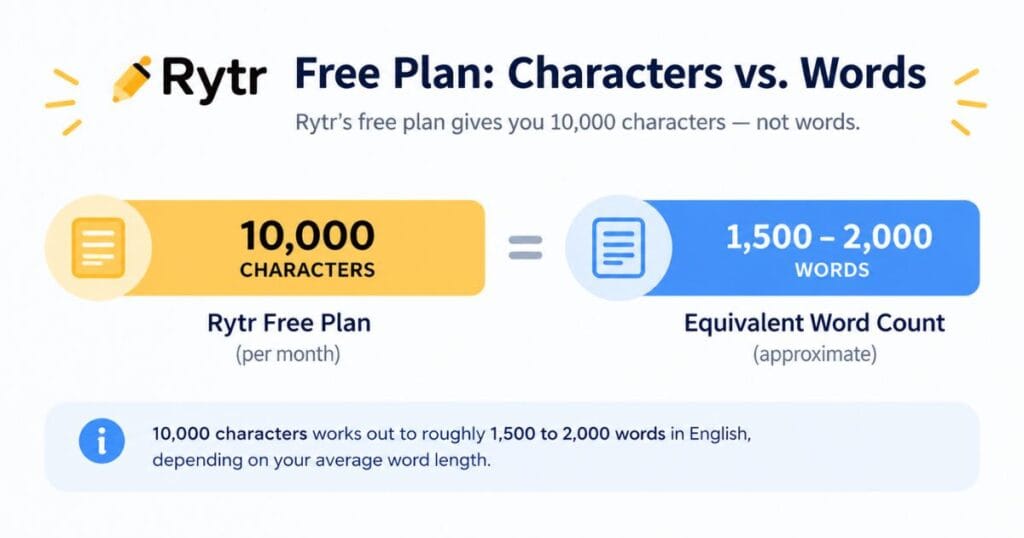
Most roundups of the best ai writing generator tools repeat the same free-plan numbers without checking them against the vendor’s own pricing page. Rytr’s free tier is widely quoted as “10,000 words,” but Rytr’s own pricing page states the limit in characters, not words, which is a meaningfully smaller allowance once you do the math.
This comparison checks Rytr, Jasper, Copy.ai, Writesonic and TinyWow directly against their current pricing pages, including which of them still has a free plan at all in 2026 and which one requires no signup whatsoever.
What an AI Writing Generator Actually Does
An ai writing generator takes a prompt, a topic or a short brief and produces draft text automatically, using a language model trained to predict likely, coherent phrasing. Some are narrow, built around specific formats like ad copy or product descriptions. Others are general-purpose, capable of drafting anything from a blog outline to a short story opening.
None of the five tools compared here claim to produce publish-ready final copy without a human editing pass. All five are positioned as a drafting accelerator, not a replacement for review.
Once a draft exists, checking whether it reads as AI-generated is a separate step. Our AI writing detectors comparison covers that half of the workflow in more depth.
The Five Tools Covered Here and How They Were Checked
Rytr, Jasper, Copy.ai, Writesonic and TinyWow were checked directly against their own current pricing pages rather than against older third-party summaries, specifically for whether a free plan still exists, what unit it measures usage in and whether signup is required at all.
Enterprise-only tools with no public self-serve pricing and browser extensions with no standalone product page, were left out of the main comparison since there was no independent tier to check against the other five on the same basis.
Pricing and Free Access, Side by Side
| Tool | Free Plan | Entry Paid Tier | Signup Required |
| Rytr | 10K characters/mo (~1,500-2,000 words) | $7.50/mo (Unlimited, annual) | Yes |
| Jasper | None | $69/mo (Pro) | Yes |
| Copy.ai | None (discontinued) | $29/mo (Chat) | Yes |
| Writesonic | Free trial only, no ongoing free plan | $79/mo (Starter, annual) | Yes |
| TinyWow | Unlimited, genuinely free | Not applicable, free only | No |
Rytr: The Free Plan Everyone Misquotes
Rytr is one of the most-searched names in the ai writing generator space, largely because of its low $7.50 a month Unlimited plan. Its free plan is stated on Rytr’s own pricing page as “10K characters per month,” not 10,000 words. Depending on average word length in the language used, that works out to roughly 1,500 to 2,000 words a month, noticeably less generous than the “10,000 words free” figure that shows up in several other comparison articles.
The paid Unlimited plan at $7.50 a month (billed annually) removes the character cap entirely and adds 50 plagiarism checks and one tone-of-voice match. Premium, at roughly $24 a month, adds support for over 35 languages and 100 monthly plagiarism checks.
Jasper: Built for Teams, Not Solo Free Use
Jasper has no free plan at all. Its Pro plan starts at $69 a month, positioned squarely at businesses and content teams rather than an individual trying a tool for the first time.
What that $69 buys is Brand Voice matching, a shared knowledge base and Style Guide enforcement across multiple writers, features aimed at keeping output consistent across a team rather than helping one person draft faster. For a solo user comparing free options, Jasper is the one tool in this list not built to be tried without paying first.
Copy.ai: The Free Plan That No Longer Exists
Copy.ai’s own pricing page confirms it does not currently offer a free plan, only a demo-request “try for free” option rather than an ongoing free tier. Its cheapest self-serve option is now a $29 a month Chat plan for five seats.
Copy.ai’s pricing has also shifted away from a simple word count toward a workflow-credit model, where a credit represents the computational cost of a task rather than a fixed amount of text. Several still-indexed comparison articles continue to list Copy.ai as free, which is no longer accurate as of its current pricing page.
Writesonic: Priced by Article, Not by Word
Writesonic offers a free trial with no credit card required but not an ongoing free plan. Its Starter tier runs $79 a month billed annually and includes 15 AI articles a month plus site audit credits, rather than a traditional word allowance.
That per-article structure reflects Writesonic’s shift toward SEO and generative-engine-optimization content production rather than general-purpose short-form writing, which makes it a stronger fit for a content team publishing full articles on a schedule than for someone who just wants to draft an email or a paragraph.
TinyWow: Genuinely Free With No Account Required
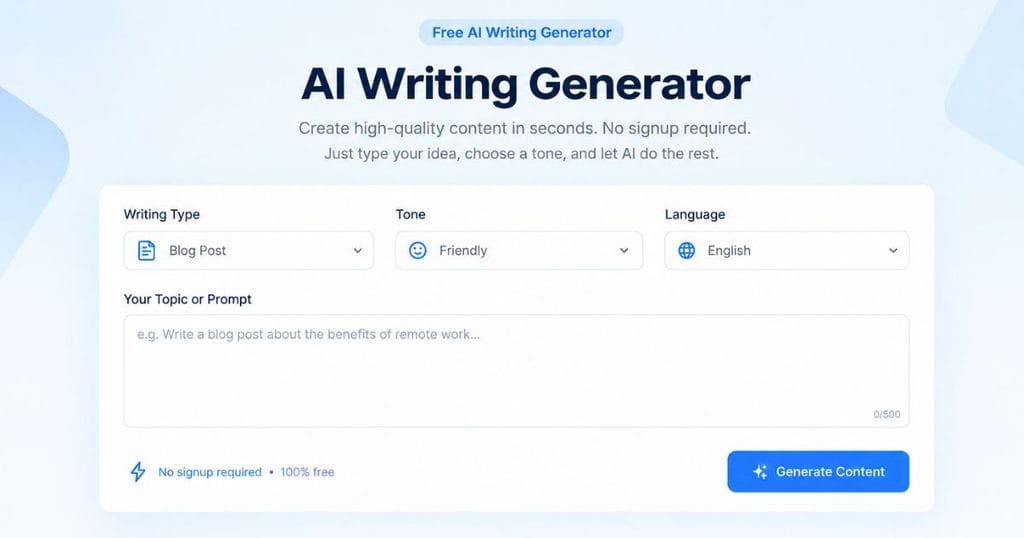
TinyWow’s AI writing tool is free with no account, no signup and no credit card at any point, the closest match in this comparison to the “free ai writing generator no sign up” intent behind a meaningful share of the search volume around this keyword.
The trade-off is that TinyWow does not offer the brand-voice matching, team collaboration or plagiarism-checking features that the paid tools build their pricing around. For a quick, one-off piece of drafted text, that gap rarely matters. For ongoing content production at volume, it starts to.
Choosing Between Character Limits and Word Limits
A character limit and a word limit are not interchangeable and the gap between them is exactly what makes Rytr’s free-plan figure easy to misreport. Average English words run about five to six characters plus a space, so 10,000 characters lands closer to 1,500-2,000 words rather than a flat 10,000.
When comparing any two ai writing generator free plans, check which unit each vendor actually uses before assuming the larger number is the more generous plan. A 2,000-word character-based limit and a 2,000-word word-based limit sound identical in a table but are not the same allowance once non-English text, punctuation-heavy copy or short-sentence styles are factored in.
Where These Tools Handle Creative and Essay Writing
All five tools can produce creative writing, story openings and essay drafts, though none of them, including Jasper’s team-focused feature set, are purpose-built fiction tools. Rytr and TinyWow both include a general-purpose long-form or story template that works reasonably well for a first draft.
For anyone specifically searching for an ai creative writing generator or an ai story writing generator, expect these general tools to produce a usable starting point rather than a finished narrative, the same disclaimer that applies to essay drafts intended for further editing rather than direct submission.
What These Tools Cannot Reliably Do Yet
None of the five tools in this comparison reliably verify facts, cite real sources or catch outdated information inside their own output. Every draft from every tool here still needs a human fact-check pass before publishing, particularly for anything involving statistics, pricing or dates.
Long-form consistency across a full article also degrades further from the prompt, all five tools included, so a 2,000-word piece generated in one pass tends to drift in tone or repeat structure more than a shorter, tightly scoped section would.
Multilingual Support Across These Five Tools
Language coverage varies more between these tools than the pricing pages tend to advertise. Rytr’s Premium plan lists support for over 35 languages, well beyond its free and Unlimited tiers, which limits output to a single language match at a time. Jasper and Copy.ai both support a broad set of major languages across every paid tier rather than gating language count by plan.
Writesonic’s language support leans toward its SEO-content use case, covering the languages most represented in its site-audit and article-generation tooling rather than a fixed published list. TinyWow’s free writer works primarily in English, with output quality dropping noticeably outside it since the underlying model was not tuned specifically for non-English prompts the way some of the paid tools are.
For anyone writing primarily in a language other than English, testing a specific prompt in that language before committing to a paid plan is worth the ten minutes, since a tool’s overall reputation says little about how it performs outside English.
API and Team Integration Access for Developers
Rytr, Jasper and Copy.ai all offer API access on their higher paid tiers, letting a development team pipe writing generation directly into another application rather than using the web interface by hand. Writesonic’s API access is tied to its higher-volume plans and built specifically around its article and audit workflows rather than general-purpose text generation.
TinyWow, consistent with its no-account, no-cost model, does not offer a documented API, since its product is built for a single person using the browser interface directly rather than for programmatic integration. A team planning to build writing generation into its own product or internal tool should treat API access, not free-tier size, as the deciding factor between the four paid options here.
Matching a Tool to What You Are Actually Writing
For occasional short drafts with zero budget and zero signup friction, TinyWow covers that case directly. For a small budget and heavier personal use, Rytr’s $7.50 Unlimited plan clears its own free character cap without the higher price tags above it.
For a content team producing full articles on a recurring schedule, Writesonic’s per-article credits or Jasper’s brand-consistency tooling fit better than a per-character free tool ever would. Copy.ai’s workflow-credit model suits teams automating multi-step content pipelines rather than someone drafting a single piece of text.
FAQs
Is there a genuinely free ai writing generator with no sign up?
Yes. TinyWow’s AI writer requires no account, no signup and no credit card at any point, unlike Rytr, whose free plan still requires creating an account and is capped at 10,000 characters a month.
Is Rytr’s free plan really 10,000 words?
No. Rytr’s own pricing page states the free plan’s limit as 10,000 characters per month, which works out to roughly 1,500 to 2,000 words in English, not a flat 10,000 words as several other comparison articles state.
Does Copy.ai still have a free plan in 2026?
No. Copy.ai’s pricing page confirms it does not currently offer an ongoing free plan. Its cheapest self-serve tier is a $29 a month Chat plan and several older comparison articles listing it as free are outdated.
What is the cheapest paid ai writing generator?
Among the five tools compared here, Rytr’s Unlimited plan at $7.50 a month (billed annually) is the least expensive paid option, well below Jasper’s $69 a month Pro plan and Writesonic’s $79 a month Starter plan.
Can an ai writing generator write a full essay or story?
It can produce a usable draft but none of the tools compared here reliably fact-check their own output or maintain full narrative consistency across a long piece, so a human editing pass is still expected before publishing or submitting the result.
Which ai writing generator is best for a content team rather than one person?
Jasper’s Brand Voice and Style Guide tools and Writesonic’s per-article credit structure are both built around team consistency and volume, while Rytr and TinyWow are better suited to a single person’s occasional drafting needs.
Conclusion
Picking among the best ai writing generator tools comes down to matching the free-plan fine print to what you actually need. TinyWow covers a genuinely free, no-signup draft. Rytr’s $7.50 plan clears its own misquoted character cap cheaply. Jasper and Writesonic are built for teams producing content at volume and Copy.ai’s pricing has moved to a credit model with no free tier left at all.
Once a draft is ready, running it past an AI writing detector comparison is a natural next step and BratGen’s homepage also has quick text generators worth pairing with a finished draft for social or cover-art use.