RUNT por Placa y Cédula: How to Check Your Vehicle Record
Every registered vehicle in Colombia has a digital record sitting in the country’s national transport database, and checking it takes less time than parking the car. Whether you’re buying a used vehicle, renewing your paperwork, or just confirming your own documents are current, knowing how to look up your record by plate or ID number is one of the more useful five-minute habits a Colombian driver can build.
What RUNT Actually Is
RUNT stands for Registro Único Nacional de Tránsito — the single national registry that consolidated what used to be over a thousand separate municipal and departmental vehicle databases into one system. Before it existed, checking a vehicle’s status meant contacting whichever local office originally registered it. Now, one lookup covers the whole country.
The registry holds the core facts about a vehicle and its owner: registration details, the vehicle identification number, insurance status, inspection validity, and any outstanding traffic infractions.
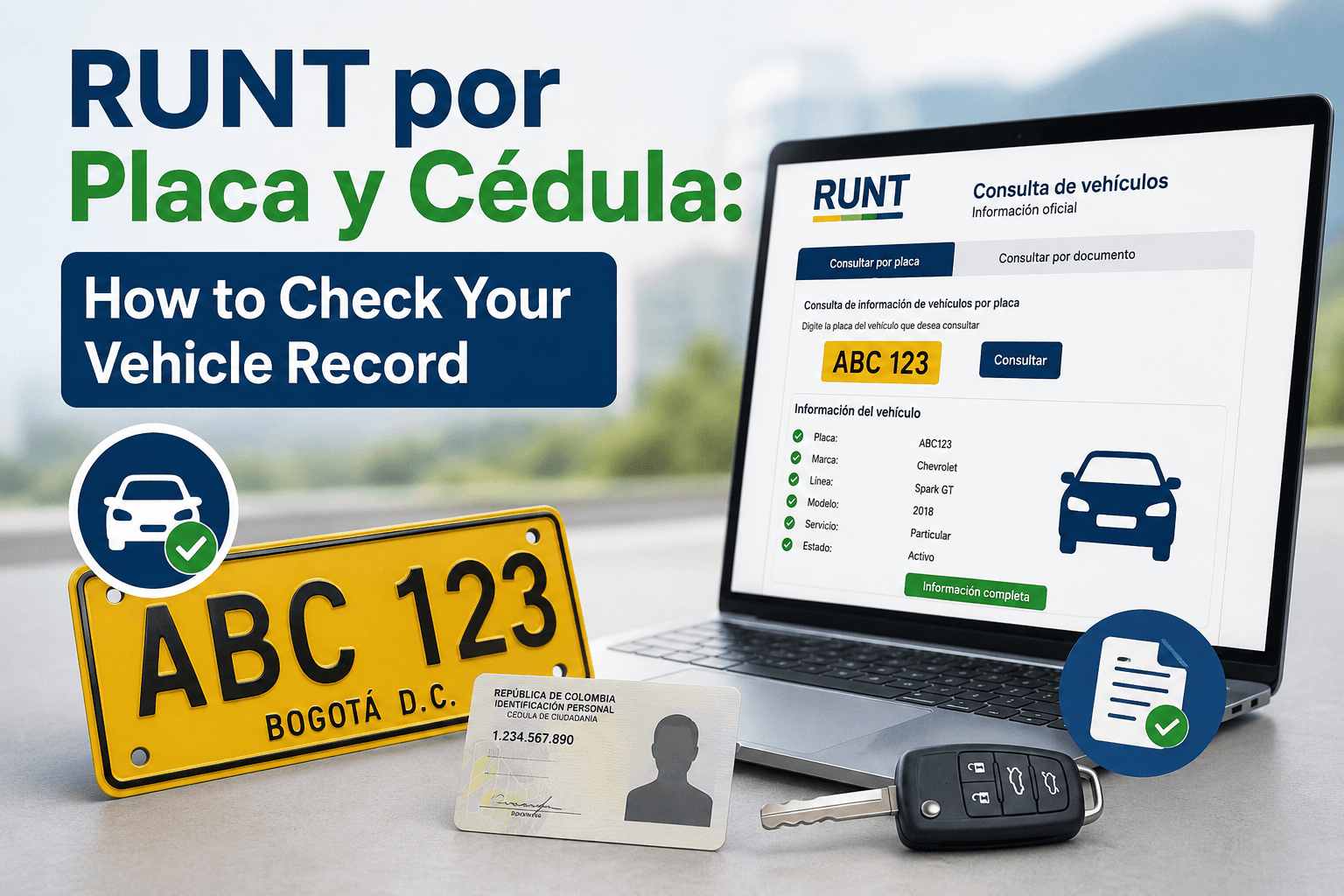
What Shows Up When You Check RUNT por Placa y Cédula
A standard lookup by plate number or cédula (ID number) typically returns:
- Vehicle registration details — make, model, year, and registered owner
- SOAT status — whether the mandatory accident insurance is active and its expiration date
- Tecnomecánica (technical-mechanical inspection) — whether the vehicle’s inspection is current
- VIN and chassis information — used to confirm a vehicle matches its paperwork
- Traffic violations (comparendos) — any pending infractions tied to the plate or the owner
Together, these give a full snapshot of whether a vehicle is legally road-ready and whether its paperwork is in order.
How to Check It
The process is simple regardless of which detail you’re starting from:
- Decide whether you’re searching by plate or by cédula. Both work; the plate is faster if you already know it, while the cédula is useful when you’re checking your own full record across vehicles.
- Enter the number into a RUNT lookup tool. A resource for checking RUNT por placa y cedula lets you run the search directly, without needing an account or in-person visit.
- Review each section of the results. Don’t just check that a record exists — confirm the SOAT and tecnomecánica dates are still valid, not just present.
- Note any pending infractions. If a comparendo shows up, you’ll want the reference number to resolve it separately.
- Save or screenshot the result if you need it for a sale, a rental, or your own records.
Why This Check Matters
Buying a used vehicle. A RUNT check confirms the seller is the actual registered owner, that the VIN matches the paperwork, and that there’s no undisclosed debt or violation attached to the plate — all before money changes hands.
Renewing SOAT or tecnomecánica. Checking the current expiration dates first prevents the common mistake of renewing early and losing coverage days, or renewing late and driving with lapsed documents.
Resolving traffic fines. Comparendos tied to a plate can affect vehicle transfers and renewals. Spotting one early gives you time to resolve it before it blocks a transaction.
General peace of mind. Confirming your own vehicle’s status periodically catches expired documents before a routine stop turns into a fine.
Reading the Results Correctly
A record showing “active” SOAT or tecnomecánica means the document is currently valid — but always check the actual expiration date rather than just the status label, since a document expiring in a few days still shows as active until it lapses.
If a search returns no record, double-check the plate or cédula number for a typo before assuming there’s an issue — mistyped characters are the most common reason a legitimate vehicle appears to have no registry entry.
Common Questions About the Process
Does checking RUNT cost anything? No. Looking up a vehicle’s record by plate or cédula is free.
Do I need to create an account to check RUNT por placa y cedula? No account is required. You only need the plate number or cédula you’re searching against.
Can I check a vehicle that isn’t registered to me? Yes. Basic registration and document-status information is publicly viewable by plate number, which is exactly what makes it useful for pre-purchase checks.
What’s the difference between checking by plate versus by cédula? Plate search returns one specific vehicle’s record. Cédula search can return every vehicle registered to that identity, which is useful for checking your own full vehicle history.
How often should I check my own vehicle’s RUNT status? A quick check every few months, or right before a renewal deadline, is enough to catch an expiring document before it lapses.
What do I do if I find an unresolved traffic violation? Note the reference number shown in the record and resolve it through the appropriate channel before attempting a renewal or transfer, since outstanding infractions can hold up both.
Final Thoughts
A RUNT check by plate or cédula takes a few minutes and answers questions that used to require a trip to a transit office. Whether you’re verifying a used car before buying it, confirming your own documents are current, or just clearing up an old fine, it’s one of the simplest habits to build into owning a vehicle in Colombia.