Rain, Storms and Robot Mowers in Australia: What IP Ratings Protect Against
Australian summer is unforgiving on outdoor equipment. A robot lawn mower with weather protection isn’t just a nice-to-have in a country where 40°C+ heat, intense UV, and sudden storm fronts are the norm — it’s the difference between a machine that lasts three seasons and one that survives five. But “weather protection” on a spec sheet is vague. Here’s what the numbers actually mean, why they matter for an Australian yard, and what else you need to think about as fire season approaches.
Decoding IP Ratings: What IPX4, IPX5, and IPX6 Actually Protect Against
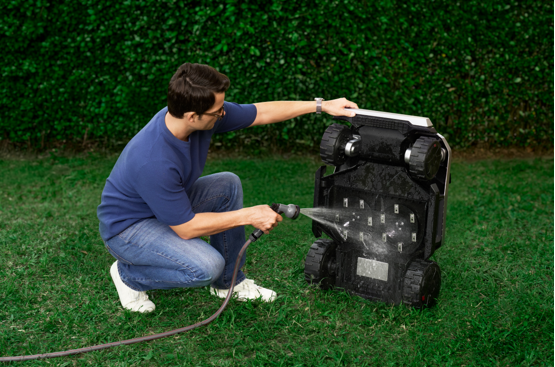
The IPX rating system describes water resistance only; the first number (if present) covers dust. An IPX4 means the mower can withstand splashing — think light rain or lawn sprinkler spray. An IPX5 bumps that up to water jets from any direction, like a moderately forceful garden hose. An IPX6, the strongest common rating, can handle high-pressure jets and heavy downpours without damage to electronics or motor.
Australia presents a twist: summer storms aren’t just rain. A late-afternoon downpour in Queensland or northern NSW often brings vigorous wind-driven spray, debris churning in water, and occasional hail. A mower rated IPX5 or higher — ideally a full IP66 designation (which also confirms dust-tightness) — handles these conditions without flinching. The second “6” in IP66 matters specifically for Australian conditions: grass clippings, pollen, and the fine dust that settles on equipment after dry periods all accelerate wear if sealing is poor. Full dust protection extends the mower’s lifespan considerably.
Rain Sensors and Automatic Retreat
Most modern robot mowers marketed as a smart mower for lawn maintenance include built-in rain detection. When moisture is sensed, the mower autonomously returns to its charging dock, which is sensible: wet grass cuts unevenly, and mowing in heavy rain accelerates electronics wear regardless of water rating. For Australian conditions, where rain can turn a yard waterlogged fast, this is a genuine safeguard.
What’s worth noting: rain sensors respond to active rainfall, not just damp ground. Light drizzle might not trigger a return; a downpour will. The threshold varies by mower and manufacturer, so if you’re buying a machine for a climate with frequent light rain, ask the maker directly what rain intensity triggers the sensor.
Heat, UV, and Charging Limits
Australia’s summer heat is harder on equipment than most people realize. Beyond 40°C, batteries discharge faster, electronics can throttle performance, and some components become brittle. Mowers designed for temperate North American or European climates often have charging-temperature limitations — typically 5°C to 40°C, below which charging is disabled to protect battery health. An Australian setup where ground temperatures exceed 40°C regularly means you may need to charge indoors or in a shaded, ventilated space rather than leaving the dock in full sun all day.
UV is equally relentless. Exposed plastics, seals, and cable jackets degrade fast under intense Australian sun. A robot lawn mower with weather protection should have UV-resistant materials, but even so, ideally position the charging dock under a pergola or shade cloth to extend component life. This isn’t just comfort — it’s maintenance strategy.
Water Restrictions and Lawn Maintenance
Most Australian states implement summer water restrictions (Stage 1–4, depending on supply), and during severe restrictions, watering lawns is prohibited or tightly limited. A consistent smart mower for lawn maintenance becomes more valuable under water restrictions because shorter, evenly maintained grass is more drought-resilient than tall, stressed growth. If your state imposes tighter restrictions heading into bushfire season, the mower’s ability to keep grass consistently low — without requiring frequent watering to support thick growth — directly supports your property’s defensibility.
Storms, Lightning, and the Charging Dock
Here’s the less-publicized reality: lightning strikes on a charging station left outdoors unattended are rare but not impossible, especially in storm-prone regions like far north Queensland. The safest practice before a thunderstorm is to disconnect the mower’s charging dock from power entirely. Many Australian households do this routinely with outdoor equipment during storm warnings. Some mowers support smart-plug integration (WiFi-controlled outlets) that let you cut power remotely via an app, but check if that’s available for your model.
Additionally, if bushfire warnings are in effect for your area, keep the charging dock accessible and functional but don’t count on it during power cuts. Bushfire-related blackouts can last days. A mower with dual-battery capability (where batteries can be pre-charged and swapped) is more reliable in a power-cut scenario than one with a built-in battery system, though this depends on the specific design.
Connecting Lawn Maintenance to Bushfire Preparation
This is where the thread ties together. A well-maintained lawn — kept short consistently, not in periodic surges — is genuinely more defensible in bushfire season. An automated mower that runs frequent, light passes every few days maintains lower fuel load better than manual mowing once every two weeks. Over a dry spring and summer, that difference is material for fire authorities assessing defensible space. Before bushfire season declarations begin in your state (timing varies — check CFA/RFS/DFES guidance), ensure your mower is functional, tested in recent rain, and positioned so the charging dock can be safely disconnected from power.
FAQ
What if my area gets hail storms? Does IPX6 protect against that?
IPX ratings test water jets and spray, not impact. Hail is a different hazard. Hail-prone areas should shelter the mower during storms — same practice recommended for most outdoor equipment.
Can I use the mower if it’s raining right now?
Depends on the rain sensor and your tolerance. If rain is moderate and the sensor hasn’t triggered a return, the mower can continue — it’s designed for it. However, heavy rain risks uneven cutting and mud tracking. Let the rain sensor do its job.
Should I bring the charging station indoors during summer?
If temperatures regularly exceed 40°C or you’re in a high-UV region, shading or moving the dock indoors during peak heat (2–5 PM) extends its lifespan. If power restrictions allow, this is worth doing.
The Bottom Line
A robot lawn mower with weather‑protection rated IP66 or equivalent handles Australian rain, heat, and seasonal storms without drama. But IP ratings are only one part of the picture. A smart robotic mower for lawn maintenance also means understanding your local water restrictions, disconnecting power ahead of incoming storms, and maintaining consistent mowing to keep your property defensible as bushfire season approaches.
When comparing real‑world options, model‑specific durability and regional compatibility are what matter most. This makes it critical to review official manufacturer documentation to confirm operating parameters suited to harsh Australian conditions. Many manufacturers publish detailed environmental performance data on their websites, including full IP sealing grades and working‑temperature ranges; for example, you can find these detailed specifications on GOKO’s site at gokorobo.com. Before official bushfire‑season declarations commence, always check guidance issued by your state fire authority (CFA Victoria, RFS NSW, DFES WA, etc.) to understand local defensible‑space requirements and recommended maintenance timelines.