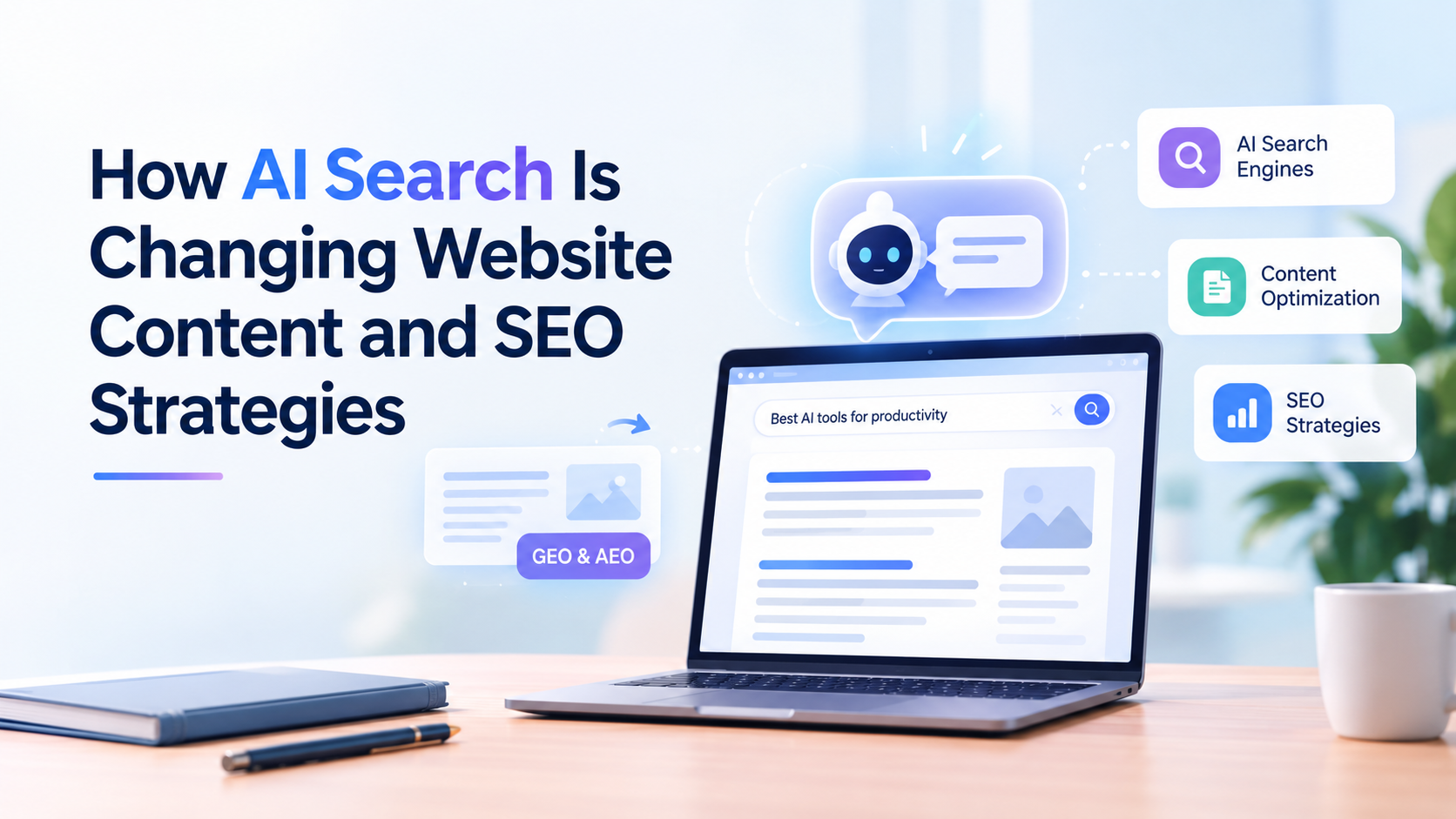
How AI Search Is Changing Website Content and SEO Strategies
People search differently now. Instead of opening five tabs to piece together an answer, they type a full question and get a short summary written by AI, usually with a few links underneath. If you run a business, publish content, or handle marketing, that raises a fair question: will your website content show up in those AI-generated answers, or only in the old list of blue links?
AI search optimization is quickly becoming part of digital marketing, because visibility now depends on how clearly your site answers questions, shows real expertise, and gives information people can trust. Traditional SEO strategies still count. You just need to understand how AI systems read your pages and decide which sources to rely on.
Nobody is asking you to throw out what already works. The job is to adjust your search engine optimization approach to the way people now search, while still writing content that actually helps the reader.
How AI Search Engines Are Changing Online Discovery
A traditional search engine takes a query and returns a ranked list of links. AI search engines work a bit differently. They interpret the question, pull details from several sources, and put together a conversational reply.
Google’s AI Overviews and AI Mode are good examples. Both can summarize a topic and link to the pages that back up the summary.
This changes how people reach websites. Say someone is researching software. They may see a quick overview of the available options first, and only then decide which sites are worth visiting for a closer comparison.
Three changes are worth watching:
- Longer, more conversational questions: People can ask detailed questions in plain language instead of typing a few keywords.
- Answers without the click: An AI-generated summary can handle basic questions, so users don’t always need to open multiple pages.
- New ways to be found: Your website can gain visibility when its information is chosen or cited as a source.
All of this means that useful, well-organized content matters more than a page built only around a popular search term.
Why Generative Engine Optimization Matters
Generative engine optimization (GEO) is the work of making your content easier for generative AI systems to find, understand, or reference. Answer engine optimization (AEO) is closely related. It’s about presenting information so that answer-focused platforms can read and use it without trouble.
The names differ, but the goal is the same: give clear, trustworthy answers that match what the user is looking for.
Neither GEO nor AEO replaces conventional SEO. Google’s own published guidance says that established SEO practices still apply to its generative search features.
A practical approach pulls these together and focuses on a few habits:
- Answer real customer questions directly.
- Back up claims with credible evidence and relevant examples.
- Organize information under descriptive headings.
- Keep your pages technically accessible and indexable.
- Show that you know the subject and have first-hand experience with it.
There is no formula that guarantees an AI platform will cite you. The best thing you can do is make each page genuinely valuable to the people it’s meant for.
How to Optimize Website Content for AI-Powered Search Results
Website content optimization now calls for more clarity, context, and usefulness. AI systems have to figure out what a page is about, judge whether it’s relevant to a question, and decide if the information is dependable enough to support an answer.
1. Answer Search Intent Clearly
Start by working out what your readers actually want to know. If a page covers a broad topic, explain the main idea first and move on to related questions or finer details afterward.
Take an article on website security. It should explain what the problem is, describe the common risks, and walk through practical steps to prevent them. Readers shouldn’t have to wade through several paragraphs of sales talk before they get to the answer.
Use descriptive headings, short explanations, and examples that make tricky subjects easier to follow.
2. Add Original Insights and Evidence
Generic content gives readers no reason to choose your website over another one. Original research, expert commentary, customer experiences, product comparisons, and practical case studies help your pages stand out.
You could add:
- Statistics from credible research organizations.
- Examples from real projects or industry experience.
- Expert explanations of common problems.
- Comparisons that help readers weigh their options.
- Fresh information that reflects current practice.
Before publishing, check the statistic’s date, methodology, and context. A solid source is worth more than an eye-catching number with nothing behind it.
3. Structure Information for Easy Understanding
Good formatting helps visitors find what they need quickly and see how the sections of a page connect.
Use a logical heading hierarchy, short paragraphs, numbered steps, and bullet points where they make sense. If you use a technical term, define it before you rely on it later in the article.
FAQ sections can also work well, as long as they answer questions your audience really asks. Don’t create near-duplicate pages just to cover every possible variation of a search query.
Technical SEO Still Supports AI Search Visibility
Even a very informative article has to be discoverable. Technical SEO helps search systems access, crawl, and understand your website content.
Check these areas on a regular basis:
- Crawlability and indexing: Make sure your important pages are open to search engines and haven’t been blocked by mistake.
- Page experience: Improve mobile usability, loading speed, and navigation.
- Internal linking: Link related articles and service pages together using descriptive, relevant anchor text.
- Structured data: Add schema markup where it accurately describes the page and follows the relevant guidelines.
- Content maintenance: Update old information, fix broken links, and merge unnecessary duplicates.
These steps support your regular search performance and can help eligible pages appear in AI search experiences. Still, meeting the technical requirements doesn’t mean a page will be picked for an AI-generated response.
For background reading, add Wikipedia/Authority Link: Search Engine Optimization to give readers more context on established SEO principles.
Measuring Search Visibility in AI-Generated Answers
SEO reporting has usually centered on keyword rankings, organic clicks, impressions, and conversions. Those numbers are still useful, but they don’t fully show how people find a brand through AI-powered search.
A wider measurement approach should track:
- Organic impressions and clicks for your key topics.
- Referral traffic from AI search platforms, where you can identify it.
- Brand mentions and citations in relevant AI-generated responses.
- Engagement, enquiries, and conversions from organic visitors.
- Changes in performance across informational and commercial search queries.
Where you can, use search analytics and reputable monitoring tools to spot patterns. It’s also worth checking important queries by hand on the platforms that matter to you. Keep in mind that results can differ by location, context, and time.
Fewer clicks don’t automatically mean your content has lost visibility. Some users now get what they need right in the search results. The reverse is true too: showing up in an AI answer doesn’t promise real traffic or business results.
The most useful way to measure is to connect visibility with qualified visits, reader engagement, and conversions.
Adapting Your Search Engine Optimization Strategies
Treat AI search as an extension of your wider digital marketing strategy. It’s no reason to rebuild every page from scratch.
A good place to begin is your highest-value content. Find the pages that answer your customers’ most important questions, then look for gaps in accuracy, originality, structure, and supporting evidence. Decide what to improve first based on what your audience needs and what matters to the business, instead of chasing every new trend.
You can also look at your wider approach to AI search and SEO to see how traditional optimization practices fit into the way people now discover information.
Above all, don’t publish piles of low-value, auto-generated articles. AI tools can help with research, outlines, and editing, but the finished piece should be accurate, distinctive, and useful. A human still needs to check the facts, add real experience, and keep the editorial standard consistent.
Preparing Your Website for the Next Phase of Search
AI-powered discovery is changing how people find information, compare options, and decide which websites deserve their time. Businesses that pair solid technical foundations with original insights and clear answers will be in a better position as search keeps evolving.
A simple action plan is enough to start: review your existing content, fix technical issues, answer your customers’ important questions, and measure visibility alongside real business results.
You don’t need a separate SEO strategy for every AI platform. You need a website that shows expertise, earns trust, and gives people a real reason to read what you’ve written.