
Best Link in Bio Tools in 2026 (Free and Paid)
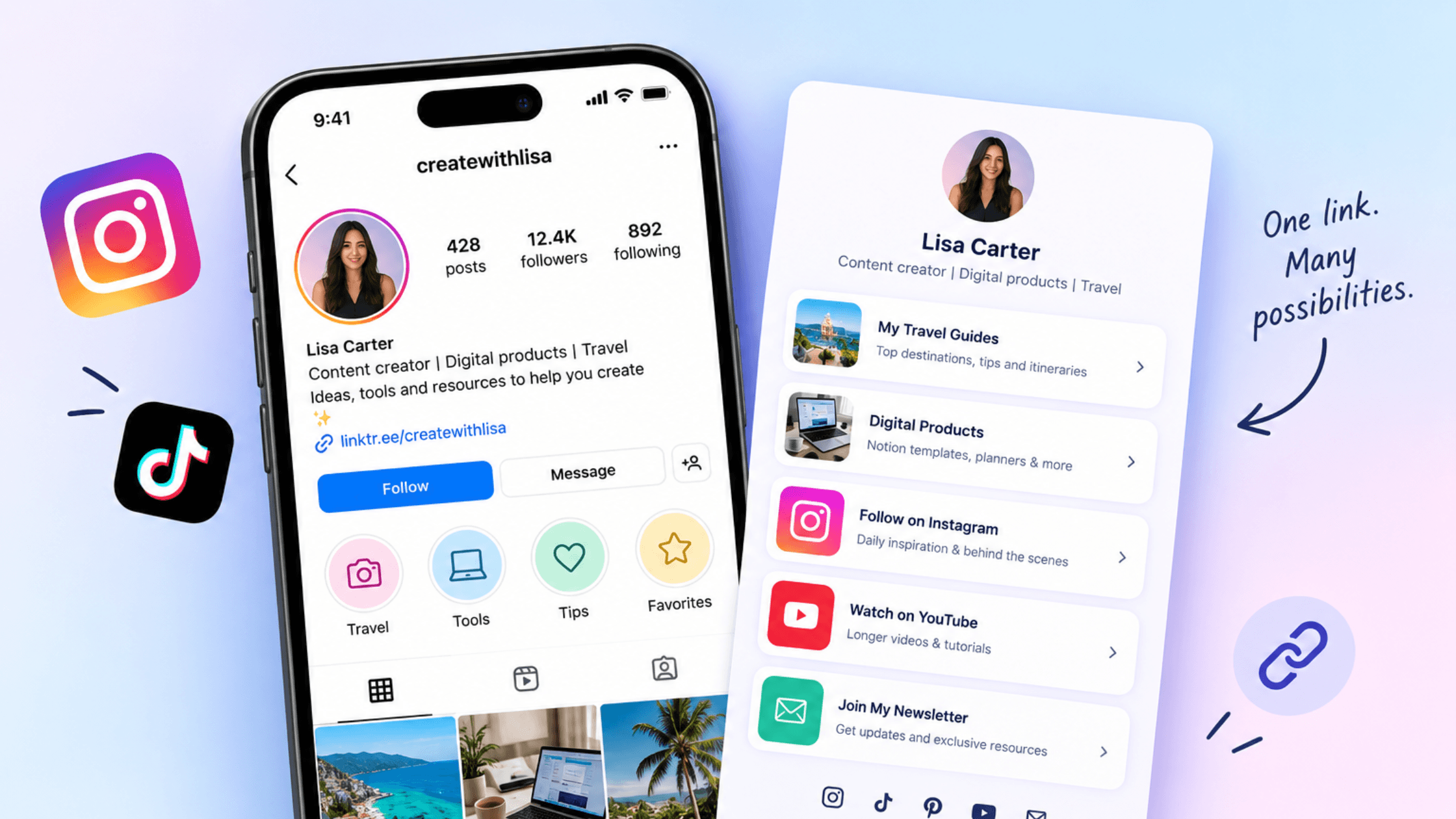
Instagram and TikTok still allow exactly one clickable link in a profile, which is the entire reason link in bio tools exist and why the category keeps growing rather than fading. The harder question in 2026 is not whether you need one, it is which tool’s free plan actually stays free once you start selling something through it. This guide compares the best link in bio tools for 2026, including a fee buried in the fine print of the most popular option that almost no comparison page mentions.
One Link, Every Destination: Why This Still Matters
Neither Instagram nor TikTok has ever allowed more than one link in a profile and neither shows real signs of changing that limit despite years of creators asking for it. A link in bio tool solves that specific constraint by turning one clickable URL into a small landing page of its own, routing visitors to a shop, a YouTube channel, a newsletter signup or whatever else actually matters that week.
What separates the tools worth using in 2026 is not whether they can list a few buttons, since every tool in this category can do that. It is what happens the moment a creator starts actually selling something through that page, since that is exactly where free plans quietly start taking a cut.
How These Tools Were Evaluated
This comparison favors tools with a genuinely usable free tier rather than a time-limited trial, since most creators want to test a bio link page before paying for one. Each entry was judged on how much the free plan actually includes, whether branding is forced on unpaid pages and specifically what percentage, if any, gets taken from a sale made through the page, a detail that changes the real cost of free far more than the monthly price does.
Quick Comparison Table
| Tool | Best For | Free Plan | Fee on Sales (Free Tier) |
| Linktree | Widest recognition, fastest setup | Yes, branded | 12 percent |
| Milkshake | Visual, card-based mobile pages | Yes, unlimited cards | Percentage cut on every tier |
| Beacons | Creator monetization and analytics | Yes, limited | Varies by plan |
| Carrd | A real mini-website, not a template | Yes, one site | None, flat pricing only |
| Campsite | Generous free analytics and team access | Yes, generous | None on standard plans |
Linktree: The Name Everyone Already Knows
Linktree remains the default most creators reach for first, since it popularized the entire category and its free plan genuinely publishes a working page with unlimited links in a few minutes. That free plan includes basic themes and a linktr.ee address, which covers the job completely for anyone just centralizing a handful of social and content links.
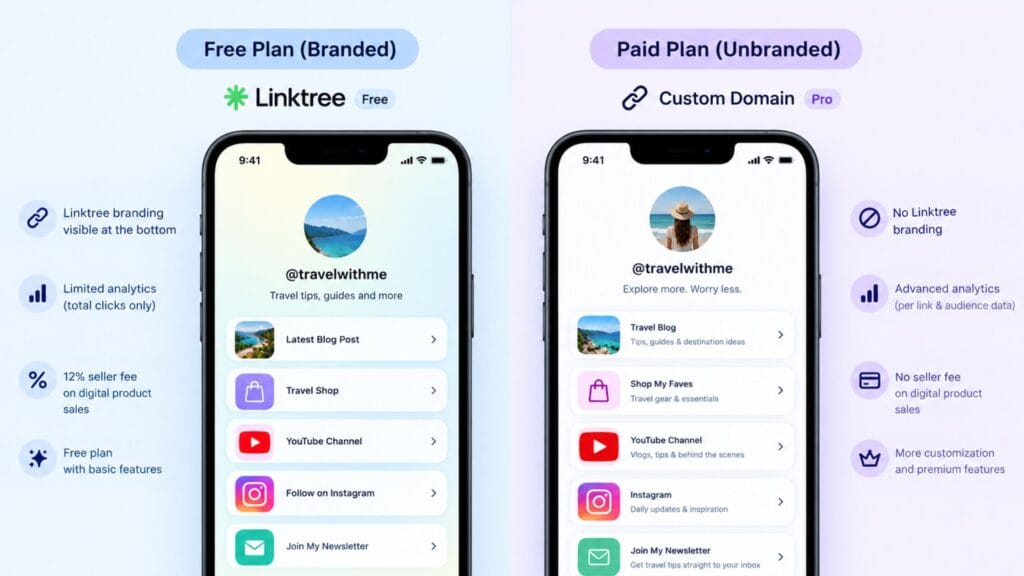
What most comparisons leave out is the cost structure once money moves through the page. An independent pricing breakdown verified against Linktree’s own pricing page confirms the free plan charges a 12 percent seller fee on any digital product sold through it, drops to 9 percent on the Starter and Pro tiers and only reaches 0 percent on the 35 dollar a month Premium plan. Free plan analytics are also limited to total click counts rather than a per-link breakdown, so a page with ten links gives no way to see which one actually performs.
Milkshake: Cards Instead of a Button List
Milkshake replaces the standard list of buttons with swipeable Cards, each one built to introduce a creator, showcase a product or collect an email address, which gives it a distinctly more visual, mobile-magazine feel than a typical link list. Built from a phone rather than a desktop editor, it has become a common default for fashion, beauty and lifestyle accounts specifically because the format photographs and screenshots well inside Instagram itself.
The free tier includes unlimited Cards and genuinely deep color customization, which is more generous than several competitors at the same price point. The tradeoff worth knowing before selling anything through it is that Milkshake takes a percentage cut of digital product sales across every tier, including the paid ones, so upgrading removes branding and adds features without removing that specific cost.
Beacons: Built Around Selling, Not Just Linking
Beacons treats the bio link page as a storefront rather than a directory, with built-in tools for tip jars, digital product sales, email capture and analytics that go deeper than a simple click count. For a creator whose bio link is genuinely part of a revenue plan rather than a convenience, that extra layer of monetization tooling is the main reason to pick it over a simpler option.
Its free plan covers the basics reasonably well but the analytics and monetization features that make Beacons worth choosing in the first place are concentrated more heavily on the paid tiers than some competitors, so it is worth trialing specifically to see how far the free plan gets you before assuming it covers everything advertised.
Carrd: For When a Template Feels Too Generic
Carrd steps outside the standard link in bio format entirely and builds a genuine one-page website instead, with far deeper control over layout, typography and embedded content than a button-list tool ever offers. For a creator or small business that wants their bio link to feel like an actual page rather than an obvious template, that extra design control is the entire appeal.
It has no seller fee structure to worry about, since Carrd charges a flat, low subscription instead of taking a cut of sales, which makes its total cost more predictable once real revenue starts moving through the page. The tradeoff is a steeper setup process than a pure link-list tool, since more design control also means more decisions to make.
Campsite: The Free Tier That Actually Behaves Like One
Campsite has built a reputation specifically around a free plan that does not feel deliberately hobbled, with genuinely useful analytics, custom domain support and team access included well before a paywall shows up. For a small brand or a creator managing more than one contributor on the same bio link, that included team access alone covers a feature several competitors reserve for paid tiers.
It does not carry the same brand recognition as Linktree or Beacons, which is worth knowing if instant visitor familiarity with the tool matters to you. For anyone comfortable with a slightly less famous name in exchange for a more generous free plan, it is one of the stronger options in this list.
What Actually Matters Beyond the Link List
Analytics depth is worth checking regardless of which tool you lean toward, since a total click counter tells you almost nothing about which specific link is actually driving traffic. Per-link breakdowns, referral sources and device data turn a bio page from a static directory into something you can genuinely optimize over time and this feature gap between free and paid tiers is often wider than the design differences that get more attention.
Custom domain support matters more than it initially seems too, since a page living at yourname.com reads as considerably more established than a shared subdomain like linktr.ee/yourname, particularly for a small business or a service professional rather than a personal creator account. Several tools in this category reserve that specific feature for a mid-tier paid plan rather than the entry-level one, so it is worth checking before assuming your first upgrade will unlock it.
The Seller Fee Buried in Every Free Plan
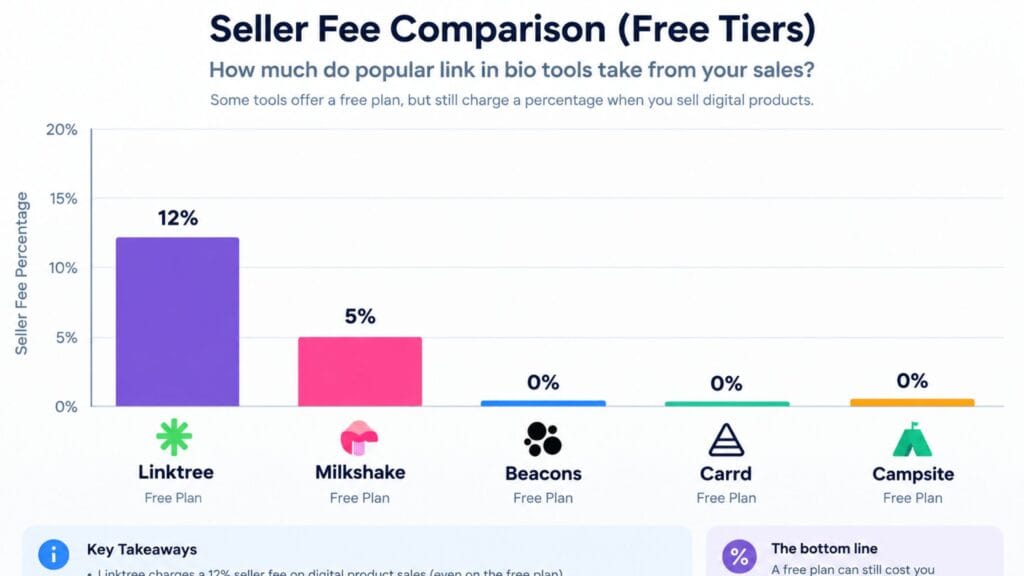
A pattern worth naming directly: several of the most recommended free link in bio tools fund that free tier partly by taking a percentage of any sale made through the page, not just through a monthly subscription. Linktree’s fee scales down as you pay more, Milkshake’s continues even on paid tiers and the exact terms are rarely the first thing a comparison article mentions, since a flat monthly price is simpler to headline than a variable percentage.
The practical fix is checking this specific detail against your own expected sales volume before picking a tool based on price alone. A free plan with a real seller fee can end up costing more over a single good month than a competitor’s flat 10 or 15 dollar subscription with no cut taken at all.
Matching a Tool to What Your Bio Link Actually Needs to Do
Choose Linktree if you mainly need a fast, recognizable hub for links that are not directly tied to sales, since its free tier handles that job well and the seller fee never comes into play. Choose Milkshake if the visual, card-based format fits your niche and you are comfortable with its ongoing commission structure regardless of which tier you are on.
Reach for Beacons specifically when monetization and audience analytics matter more than page aesthetics and pick Carrd when you want something that reads as an actual website rather than an obvious template. Campsite is worth a serious look if a generous, full-featured free tier matters more to you than picking the most recognizable name in the category.
Once your bio link page is set, pairing it with a solid posting schedule and a caption that fits the platform closes the loop. Our guides to the best time to post on Instagram and TikTok and the best AI caption generators cover the rest of that workflow and the styled text and font tools on this site are worth a look for anything you want to style beyond the bio link itself.
FAQs
What is the best free link in bio tool?
Linktree remains the most recognizable free option and covers basic link organizing well, though its free plan carries branding and a 12 percent fee on any digital product sale. Campsite is worth considering as a less famous alternative with a notably more generous free tier.
Does Linktree take a cut of sales made through the free plan?
Yes, Linktree charges a 12 percent seller fee on digital product sales on its free plan, dropping to 9 percent on Starter and Pro and reaching 0 percent only on the Premium tier. This fee structure is rarely highlighted in casual comparisons that focus only on the monthly subscription price.
What is the best link in bio tool for selling digital products?
Beacons is built specifically around creator monetization, with tip jars, product sales and email capture built into the core product rather than added on. Milkshake also supports digital product sales through Cards, though it takes a percentage cut across every tier, including paid ones.
Is Milkshake really free?
Milkshake’s free tier includes unlimited Cards and real customization with no monthly cost but it takes a percentage commission on any digital product sold through the page regardless of which tier you are on, so free does not mean commission-free for anyone selling something.
What is the best link in bio tool that looks less like a template?
Carrd offers the deepest design control in this category, since it builds an actual one-page website rather than a fixed link-list layout and it charges a flat subscription with no seller fee taken from sales.
Do I need a link in bio tool if I only post a few times a month?
Even infrequent posters benefit from a bio link tool once they have more than one destination to send traffic to, a shop, a newsletter and other social profiles, for example, since Instagram and TikTok still only allow one clickable link each. A simple free plan from Linktree or Campsite is usually enough at that posting frequency.
Conclusion
Every tool in this category solves the same one-link constraint but the real difference between them shows up the moment money starts moving through the page rather than at signup. Read the fee structure with the same attention you would give a monthly price, since a free plan that quietly takes twelve percent of every sale is not actually the cheapest option once a launch goes well.




One Comment