
The Technology Behind Snow Day Predictions: Weather Data, Algorithms, and Forecast Models
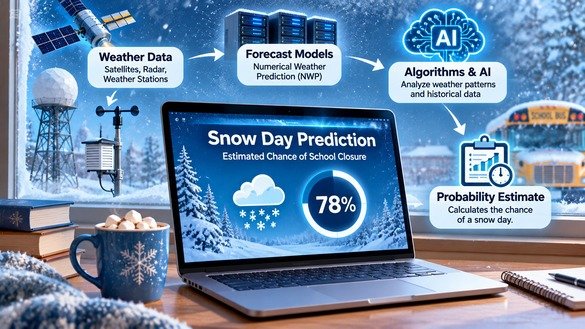
A winter storm can turn an ordinary school morning into an unexpected day off. But how can technology estimate whether schools might close before a school district makes its official announcement? The answer involves weather forecasting systems, historical data, predictive algorithms, and increasingly, artificial intelligence.
An online snow day predictor uses available weather information to estimate the likelihood of school closures based on conditions in a particular location. These tools help students and parents understand what approaching winter weather might mean for their daily plans. However, generating a useful prediction requires more than checking how many inches of snow are expected.
Behind the prediction is a process that transforms meteorological observations and forecast data into an estimate of potential school disruptions. Understanding this technology helps explain how snow day predictions work, what information influences them, and why their results are never guaranteed.
1. Collecting Weather Data From Multiple Sources
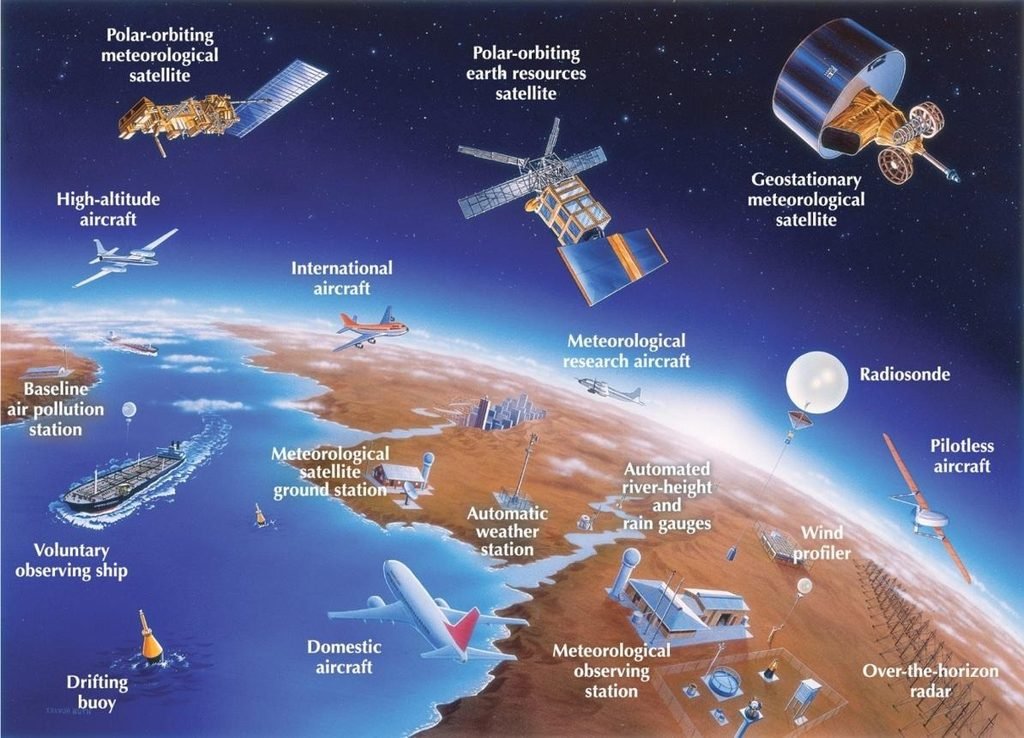
Every snow day prediction begins with weather information. A forecasting system needs to understand current conditions and estimate how the weather may change over the coming hours.
Weather data can come from several sources, including:
- National Weather Service (NWS): Provides weather forecasts, winter weather advisories, warnings, and meteorological information across the United States.
- NOAA: Provides weather observations, climate information, and forecast-related datasets.
- Weather stations: Record local conditions such as temperature, precipitation, humidity, wind speed, and snowfall.
- Weather radar: Helps meteorologists monitor precipitation, identify approaching storms, and estimate their movement.
- Satellite observations: Provide information about cloud patterns, atmospheric conditions, and developing weather systems.
These sources contribute different types of information. For example, weather radar helps track precipitation approaching a region, while ground-based weather stations provide observations of conditions already occurring at specific locations.
Combining these datasets gives forecasting systems a more complete picture than relying on a single weather observation.
2. Understanding the Weather Variables That Affect Snow Day Predictions
Not every snowfall results in a school closure. The impact of winter weather depends on several interacting conditions, which prediction systems must consider when estimating potential disruptions.
Snowfall Accumulation
Expected snowfall is one of the most important variables. A forecast predicting several inches of snow may indicate difficult travel conditions, particularly in areas that receive limited snowfall each winter.
However, total accumulation does not tell the entire story. Snowfall intensity and the rate of accumulation also matter. A storm producing heavy snow over a short period may create more immediate transportation problems than the same amount spread across several hours.
Temperature and Precipitation Type
Temperature influences whether precipitation falls as snow, rain, sleet, or freezing rain. It also affects whether snow accumulates or melts after reaching the ground.
Freezing rain and ice can create particularly hazardous road conditions, even when snowfall totals are relatively low.
Storm Timing
The timing of a winter storm can significantly influence school closure estimates.
Snow falling overnight may give road crews several hours to clear major routes before morning transportation begins. However, snowfall continuing during the morning commute can make it more difficult for buses, students, teachers, and other school employees to travel safely.
Wind Speed and Visibility
Strong winds can create blowing snow, reduce visibility, and cause snowdrifts on roads. These conditions may make transportation difficult even when total snowfall is not especially high.
Together, these weather variables help forecasting systems evaluate the potential severity and timing of winter conditions.
3. How Numerical Weather Prediction Models Forecast Snowstorms
Numerical Weather Prediction (NWP) is a major part of modern weather forecasting. These models use mathematical equations representing atmospheric physics to estimate how weather conditions will develop.
They process information about the atmosphere, including temperature, air pressure, humidity, wind, and moisture, to simulate future weather conditions.
The process generally involves three stages:
- Initial observations: Weather stations, satellites, radar systems, and other sources provide information about current atmospheric conditions.
- Atmospheric simulation: Computer models process these observations using mathematical equations that represent physical processes in the atmosphere.
- Forecast generation: The models estimate future conditions, including precipitation, temperature changes, wind patterns, and potential snowfall.
Weather forecasts are not perfectly precise because the atmosphere is constantly changing. Small differences in initial conditions or storm movement can influence the eventual snowfall forecast.
For snow day prediction systems, these forecasts provide important information about the possibility, timing, and severity of winter weather.
4. How AI and Machine Learning Improve Snowfall Predictions
Traditional weather forecasting relies heavily on physics-based numerical models. Artificial intelligence and machine learning introduce another approach by identifying patterns in large collections of historical weather data.
Machine learning algorithms can be trained using previous weather observations and recorded outcomes. After training, these models can recognize relationships between different meteorological conditions and use those patterns to estimate future conditions.
For example, a snowfall accumulation model might examine historical relationships between:
- Air temperature
- Precipitation intensity
- Humidity
- Wind speed
- Existing snow depth
- Road surface temperature
- Upper-atmosphere conditions
These variables can influence how much snow actually accumulates on the ground.
AI-based systems can also help identify local differences that traditional forecasting methods may not fully capture. For example, snow accumulation on asphalt roads can differ from accumulation measured on grass or other observation surfaces.
Some advanced weather forecasting projects also use computer vision to analyze images from roadside cameras. This can provide additional observations of real-world snow accumulation where traditional measurement stations are limited.
It is important to understand that AI does not eliminate forecasting uncertainty. The quality of its predictions still depends on the accuracy, coverage, and relevance of the data used to train and operate the model.
5. How Prediction Algorithms Estimate the Probability of a Snow Day
Weather forecasts describe expected atmospheric conditions, but a snow day prediction system must interpret what those conditions could mean for school transportation and daily operations.
This is where prediction algorithms become important.
A snow day prediction algorithm may evaluate several factors together:
- Expected snowfall accumulation
- Snowfall intensity and duration
- Temperature and freezing conditions
- Precipitation during morning commute hours
- Wind and visibility
- Regional winter weather patterns
- Historical school closure behavior
The system processes these variables and estimates how strongly they indicate a potential school closure.
For example, consider two locations expecting similar snowfall totals.
One location regularly experiences heavy winter storms and has established snow removal infrastructure. Another location receives snow infrequently and may have limited equipment or experience managing icy roads.
Even with similar weather forecasts, the likelihood of school disruption may differ considerably.
A prediction model can account for these regional differences by incorporating location-specific information and historical closure patterns.
What Does a Snow Day Probability Mean?
Some online calculators present their results as percentages.
A prediction of 80%, for example, represents a high estimated likelihood according to that particular tool’s model. It does not mean that a school district has confirmed a closure or that there is a guaranteed outcome.
Different calculators may use different data sources, algorithms, and weighting methods. Consequently, their predictions can vary even when they analyze the same general weather conditions.
6. Why Location and Historical Data Matter
Weather conditions can vary significantly across relatively short distances. Elevation, geography, local climate, and infrastructure all influence how winter storms affect communities.
Historical data helps prediction systems account for these regional differences.
Consider the difference between a northern community accustomed to frequent snowfall and a southern city where significant snowstorms are uncommon.
The northern community may have established snow removal operations, winter-ready transportation equipment, and greater experience managing icy roads. The southern city may experience more disruption from a comparatively small amount of snow.
Historical school closure records can help identify how particular districts have responded to similar winter conditions in the past.
Other local factors can also matter:
- Road maintenance and snow removal capacity
- School bus routes and transportation distances
- Elevation and local geography
- Availability of winter road treatment equipment
- Previous closure decisions during comparable storms
This is why location-specific predictions can be more informative than estimates based only on regional snowfall totals.
7. How Weather APIs Power Online Snow Day Calculators
Weather APIs play an important role in connecting forecasting information with online applications.
An API, or Application Programming Interface, allows one software application to request information from another service. Weather applications use these interfaces to retrieve forecasts and observations without building their own meteorological measurement networks.
A typical online weather application may use APIs for several purposes:
- Geocoding: Converts a ZIP code, city, or location into geographic coordinates.
- Weather forecasts: Retrieves expected temperature, precipitation, snowfall, and wind conditions.
- Historical weather: Provides past observations that can support analysis and comparisons.
- Weather alerts: Supplies information about relevant winter weather advisories and warnings.
A snow day calculator can use this information as the foundation for its prediction process.
The general workflow looks like this:
- A user enters a location.
- The application identifies its geographic coordinates.
- The system retrieves relevant weather forecast data.
- A prediction algorithm evaluates important winter weather conditions.
- The application displays an estimated probability or prediction.
The exact implementation varies between platforms. Some tools use relatively simple statistical calculations, while others incorporate more sophisticated models and historical information.
This technology makes it possible to turn complex weather datasets into information that ordinary users can understand through a browser or mobile application.
8. Why Snow Day Predictions Are Not Always Accurate
Even sophisticated forecasting systems cannot guarantee that a school will close.
There are several reasons predictions can change or turn out to be incorrect.
- Weather forecast uncertainty: Storm tracks, precipitation intensity, and temperatures can change as a weather system develops. A small shift can affect expected snowfall and local conditions.
- Microclimates and local differences: Nearby communities may experience different snowfall amounts because of elevation, geography, and variations in storm movement.
- Road conditions: Snow accumulation is only one part of winter transportation safety. Ice, visibility, untreated roads, and drifting snow can create additional hazards.
- Changing forecasts: Weather information is updated as new observations become available. A prediction made the previous evening may differ from one generated early the following morning.
- Human decision-making: School administrators consider factors that automated calculators cannot always measure, including bus route safety, road crew assessments, power outages, and district-specific policies.
For these reasons, a snow day prediction should be treated as an estimate rather than an official announcement.
9. What Is the Future of Snow Day Prediction Technology?
Snow day prediction technology is likely to benefit from improvements in weather data collection, machine learning, and location-specific forecasting.
Higher-resolution weather models may provide more detailed information about conditions in individual communities. Improved radar systems and additional ground observations can help meteorologists monitor developing storms more effectively.
Machine learning may also improve the way forecasting systems interpret snowfall accumulation, precipitation timing, and local weather patterns.
Another important development is the growing availability of weather information through APIs. As weather services make more datasets accessible, developers can build applications that transform complex meteorological information into practical tools.
However, the most useful systems will not necessarily be those that produce the most complicated predictions. Reliable data, transparent estimates, and clear communication of uncertainty are equally important.
Conclusion
The technology behind snow day predictions combines weather observations, numerical forecasting models, historical information, and predictive algorithms to estimate the likelihood of school closures.
Weather APIs make forecasting data accessible to online applications, while artificial intelligence and machine learning offer additional ways to analyze complex weather patterns. Location-specific information helps these systems account for differences between communities.
Although these technologies can help families prepare for approaching winter storms, they cannot replace official school district announcements. Their purpose is to provide an informed estimate of potential disruptions, not a guarantee that schools will close.
As weather forecasting and data-processing technologies continue to improve, snow day prediction tools will become increasingly useful for understanding winter weather and planning ahead.