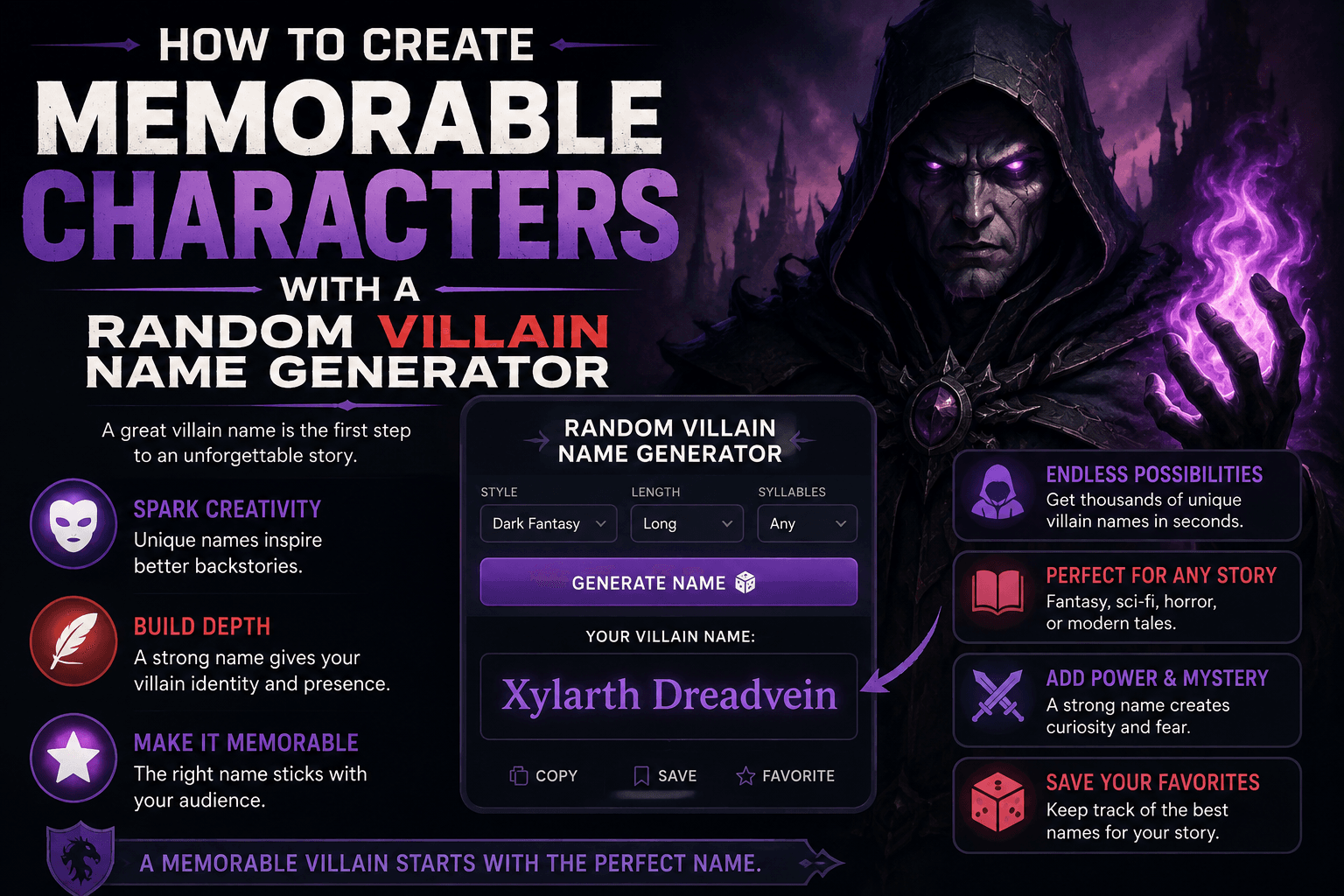
How to Create Memorable Characters With a Random Villain Name Generator
Creating a memorable villain is one of the most rewarding parts of storytelling. A strong antagonist can challenge the protagonist, raise the stakes, and give a story greater emotional depth. However, developing a compelling villain involves more than giving a character an intimidating appearance or an evil personality.
A memorable name can help establish a villain’s identity from the beginning. Using a random villain name generator can provide inspiration when you need fresh ideas or want to explore character concepts that you might not have considered on your own.
Why a Villain’s Name Matters
A character’s name is often one of the first details readers encounter.
An effective villain name can suggest personality, background, culture, status, or even the type of threat the character represents.
A short and sharp name might suit a calculating antagonist, while a more elaborate name could fit a powerful ruler, mysterious sorcerer, or ancient figure.
The goal is not necessarily to create the most frightening name possible. The name should fit the character and the world in which the story takes place.
Start With the Character’s Role
Before choosing a name, determine what role the villain plays in the story.
Is the character the central antagonist, a rival, a corrupt leader, a supernatural threat, or a secondary villain?
Understanding the character’s function can guide the naming process.
A major antagonist may need a distinctive name that readers can easily remember, while a minor villain might benefit from something simpler.
Consider the Villain’s Personality
Personality should influence naming decisions.
A ruthless villain might have a name with a harsh sound, while a charming manipulator could have a sophisticated or ordinary-sounding name that contrasts with their behavior.
This contrast can sometimes make a character more interesting.
A villain does not need a name that immediately announces that they are evil.
Use a Random Generator for Inspiration
Coming up with names from scratch can become difficult, particularly when developing multiple characters.
A random villain name generator can provide a starting point by producing combinations that might inspire a character’s identity, background, or personality.
The generated name does not have to be used exactly as provided.
You can modify the spelling, combine elements from different suggestions, or use the result as inspiration for something completely new.
Match the Name to the Story’s Setting
A name should feel appropriate for the world of the story.
A fantasy villain might have a name influenced by the linguistic style of the fictional culture, while a contemporary thriller may require something more realistic.
Science fiction settings can provide opportunities for unusual names, titles, or aliases.
Consistency helps make the fictional world feel believable.
Think About Sound
The way a name sounds can influence how readers perceive a character.
Names containing hard consonants may feel forceful, while softer sounds can create a more mysterious or elegant impression.
Length also matters.
Extremely long names may be difficult for readers to remember, particularly if the character appears frequently.
Consider Using an Alias
Some villains are better known by titles or aliases than their birth names.
A character might be called “The Warden,” “The Ash King,” or another title that reflects their reputation.
An alias can create mystery and allow the character’s true identity to be revealed later.
Using a random name generator can help develop both the character’s real name and their public identity.
Avoid Making the Name Too Obvious
A villain does not always need an overtly sinister name.
Names such as “Darkbane” or “Bloodfang” immediately communicate danger, but they may feel predictable depending on the genre.
An ordinary or elegant name can sometimes be more effective because the contrast between the name and the character’s actions creates intrigue.
Give the Villain a Motivation
A good name cannot compensate for weak characterization.
Memorable villains usually have understandable motivations, even when their actions are morally wrong.
Perhaps the villain wants revenge, believes they are protecting society, seeks power, fears losing control, or genuinely thinks their actions are necessary.
Understanding motivation makes the character feel more complete.
Create a Meaningful Conflict
The villain should challenge the protagonist in a meaningful way.
This conflict does not always have to be physical.
A villain might challenge the protagonist’s beliefs, relationships, goals, or moral principles.
When the antagonist represents something personally important to the protagonist, the conflict can become more emotionally engaging.
Give the Villain Strengths and Weaknesses
Perfect villains can become predictable.
Giving an antagonist both strengths and weaknesses makes them more believable.
A character might be intelligent but emotionally unstable, powerful but arrogant, persuasive but unable to trust others, or highly disciplined but obsessed with control.
These contradictions can create opportunities for character development and plot twists.
Make the Villain Distinctive
A memorable antagonist needs characteristics that separate them from other characters.
This could be a unique way of speaking, a particular philosophy, an unusual habit, a distinctive appearance, or a recognizable method of solving problems.
The name should complement these traits rather than carry the entire burden of making the character memorable.
Use Names to Reveal Background
A character’s name can provide subtle information about their history.
The name might indicate a particular region, social class, family, profession, or cultural background.
For fictional worlds, naming conventions can also help establish the differences between kingdoms, civilizations, communities, or species.
This makes names part of the world-building process.
Consider the Villain’s Reputation
Sometimes a villain’s name becomes powerful because of what other characters associate with it.
A relatively ordinary name can become intimidating after the character develops a frightening reputation.
This approach can be particularly effective because the reader gradually learns why the name matters.
The name becomes meaningful through the character’s actions rather than through its sound alone.
Build a Backstory Around the Name
Once you have a name you like, ask where it came from.
Was the character named by their parents? Did they choose the name themselves? Was the name given to them by enemies or followers?
A title or nickname might have an important story behind it.
Developing this history can turn a simple name into a meaningful character detail.
Test the Name in Dialogue
A name may look excellent on paper but sound awkward when characters say it repeatedly.
Read dialogue containing the villain’s name aloud.
Consider whether it is easy to pronounce, remember, and distinguish from the names of other characters.
If several characters have similar names, readers may struggle to keep them apart.
Consider the Genre
Different genres have different naming expectations.
A fantasy novel may support elaborate names and dramatic titles, while a realistic crime story may require names that sound authentic to a particular location and period.
Horror can benefit from ordinary names that become unsettling through context.
Science fiction provides greater flexibility but still benefits from consistent naming conventions.
Don’t Forget the Protagonist
The villain’s name should work alongside the protagonist’s name.
Consider whether the two names sound too similar or whether they create an intentional contrast.
Distinct names help readers quickly identify characters during dialogue and action scenes.
Generate Multiple Possibilities
Instead of immediately choosing the first name you receive, generate several options.
Compare them based on sound, meaning, genre, personality, and memorability.
You may find that one name works particularly well once you begin developing the character around it.
Generating multiple possibilities also prevents you from becoming attached to an option simply because it was the first suggestion.
Let the Character Change Your Choice
Sometimes the character’s personality develops differently during writing.
A name that seemed perfect during the planning stage may no longer fit once the character’s motivations and history become clearer.
Do not be afraid to revise it.
Character development and naming can influence one another throughout the writing process.
Conclusion
A memorable villain requires much more than an intimidating name. Strong antagonists have motivations, weaknesses, personalities, backgrounds, and meaningful conflicts with the protagonist.
A random villain name generator can make the brainstorming process easier by providing unexpected ideas and helping writers move beyond familiar naming patterns. The generated result can serve as a starting point rather than a final answer.
By combining a suitable name with thoughtful characterization, distinctive traits, meaningful motivations, and a strong role in the story, writers can create villains who remain memorable long after readers finish the final chapter.
———————–
Meta Title
How to Create Memorable Characters With a Random Villain Name Generator
Meta Description
Learn how a random villain name generator can inspire memorable antagonists while exploring personality, motivation, setting, backstory, and character development.