Best Social Media Scheduler in 2026 (Free and Paid)
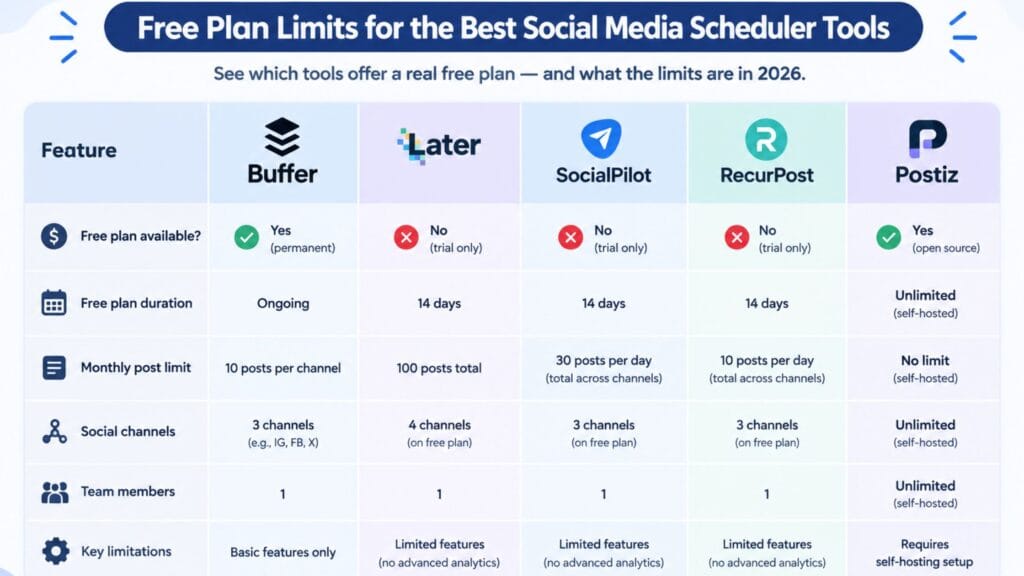
Search for a free social media scheduler and Buffer, Later, SocialPilot and RecurPost all show up as if they are interchangeable options. They are not. Only Buffer among those four currently has a permanent free plan. Later and SocialPilot both run on a 14-day trial that converts to paid and RecurPost dropped its free tier in favor of the same trial structure.
This social media scheduler comparison sorts out which tools genuinely stay free, states the specific caps on the ones that do and covers Postiz, the one entry here that is free in a completely different way: open source and self-hostable rather than a capped SaaS account.
Why “Free Social Media Scheduler” Searches Turn Up Trial-Only Tools
A trial and a free plan look identical in a search result and nearly identical on a pricing page’s top line. Both let a new user start scheduling posts without a card, at least for a while. The difference only shows up in the fine print: a trial has a countdown built in and a free plan does not.
Because most comparison content treats “has a free option” as a single category, tools with a genuine permanent free tier and tools with a 14-day trial end up listed side by side as if they work the same way. They do not and the gap only becomes obvious once the trial clock runs out.
The Tools in This Comparison and How They Were Checked
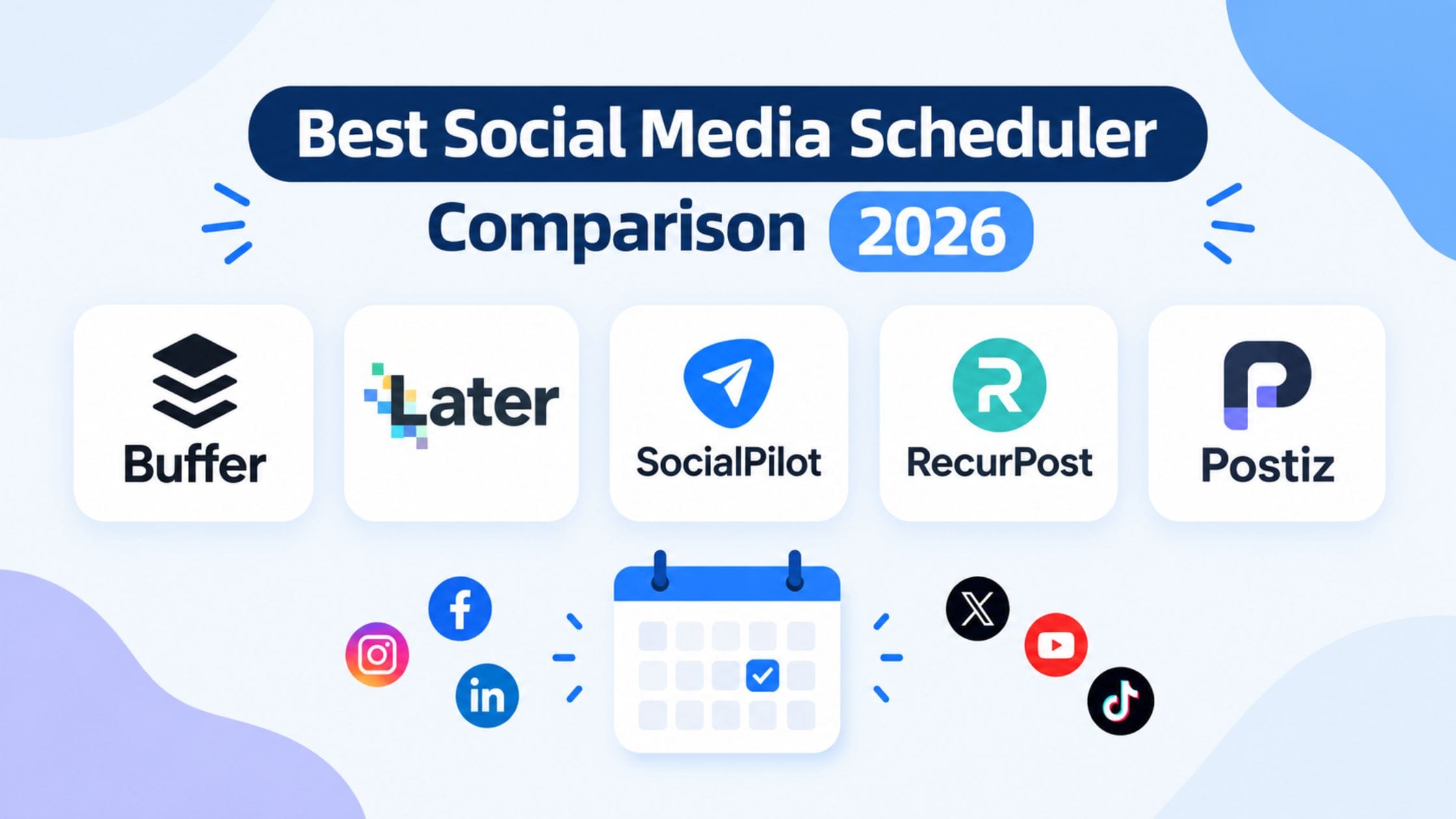
Five tools are compared here: Buffer, Later, SocialPilot, RecurPost and Postiz. Each one was checked against its current pricing page rather than an older summary, specifically for whether any part of it works indefinitely without payment and if so, what the exact channel and post caps are.
Hootsuite and a few other well-known names are left out of the detailed comparison because they have operated on a trial-only model for a long time already, which is well documented elsewhere and including them here would not add a new finding to this specific comparison.
Free Access, Side by Side
| Tool | Free Access Type | Exact Limit | Best For |
| Buffer | Permanent free plan | 3 channels, 10 queued posts per channel | A single creator posting to a few platforms |
| Later | 14-day trial only | Converts to paid; no ongoing free tier | Visual content planners who commit to a paid plan |
| SocialPilot | 14-day trial only | Converts to paid; no ongoing free tier | Agencies needing approval workflows and white-label reports |
| RecurPost | 14-day trial only (free plan discontinued) | Converts to paid; no ongoing free tier | Businesses focused on recurring, evergreen content |
| Postiz | Free, open source | Self-hosted; no vendor-imposed cap | Technically comfortable users willing to run their own server |
Buffer: The One Mainstream Tool With a Real Free Plan
Buffer’s free plan connects up to 3 channels, including Instagram, TikTok, Facebook, LinkedIn or Google Business Profile and holds a queue of 10 scheduled posts per channel at any given time. That queue limit is not a monthly posting cap; it refills as scheduled posts go out, so a single creator posting a few times a week across a small number of platforms can run on the free plan indefinitely.
Paid plans start at roughly $5 per channel per month on the Essentials tier, which removes the 3-channel cap and the 10-post queue limit, adding advanced analytics and additional publishing tools. Pricing scales per connected channel rather than per user, which matters for anyone planning to add more accounts later.
Later: Fourteen Days, Then a Subscription
Later does not currently offer an ongoing free plan, only a 14-day trial. Once that trial ends, the lowest tier, Starter, runs roughly $18.75 a month on annual billing for one social set covering up to 8 profiles across platforms like Instagram, TikTok and Pinterest, with 30 scheduled posts per profile each month.
Later’s strength is visual content planning, particularly for Instagram grid layouts, which makes it a reasonable pick for a content-heavy account once the budget for a paid plan is there but it is not an option for someone specifically looking to avoid a subscription.
SocialPilot: Built for Agencies, Not Free Users
SocialPilot’s free access is also a 14-day trial with no card required, converting to a paid plan afterward. The entry-level Essentials tier starts around $20 a month for 5 social accounts and 1 user, though the agency-focused features SocialPilot is usually chosen for, like approval workflows and white-label reports, only unlock at the $100-a-month Premium tier.
For an agency that already expects to pay for scheduling software, SocialPilot’s structure makes sense. For anyone comparing it specifically as a free option because it appears in “best free social media scheduler” search results, it is worth knowing upfront that no free tier exists.
RecurPost: The Free Plan That No Longer Exists
RecurPost is a specific example worth naming because it used to offer a free plan and does not anymore. It now operates on the same 14-day-trial-then-paid structure as Later and SocialPilot. Its particular strength, recurring or evergreen content that reposts automatically on a schedule, remains a genuine differentiator among paid options but it should not be mistaken for a free tool based on older comparison content that has not been updated.
This pattern, a scheduler quietly dropping its free tier while still appearing in “free” search results from outdated articles, shows up often enough in this category that checking a tool’s current pricing page directly is worth the extra step before recommending it as free to anyone else.
Postiz: Free and Open Source, a Different Kind of Free
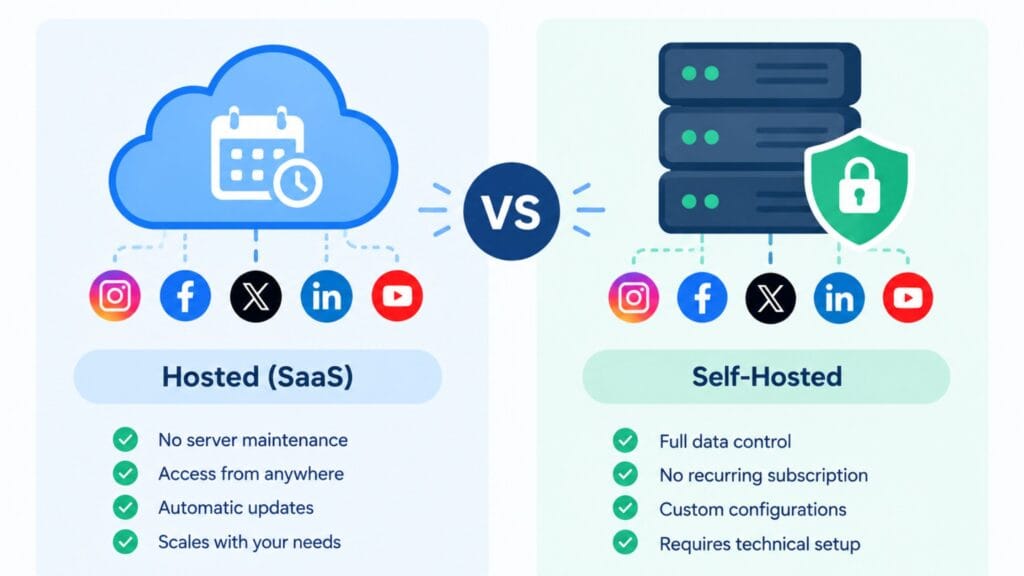
Postiz is a genuinely free social media scheduler but in a different sense than Buffer’s capped free plan. It is open source, published on GitHub and can be self-hosted on your own server at no software cost. There is no vendor-imposed channel or post limit, since you are running the software yourself rather than using a shared SaaS account.
The tradeoff is real: self-hosting means handling your own server setup, updates and uptime instead of trusting a vendor to keep the service running. For a technically comfortable user or a small team with some server experience, that tradeoff can be worth avoiding a subscription entirely. For someone who wants to sign up and start scheduling in five minutes, Buffer’s free plan remains the simpler starting point.
Platform API Limits That Apply No Matter Which Scheduler You Pick
Every tool in this comparison, free or paid, ultimately publishes through the same platform APIs, Instagram’s, TikTok’s, LinkedIn’s and so on, which means each platform’s own posting limits apply regardless of which scheduler you use. Instagram’s API, for example, caps a single account at roughly 100 posts in a rolling 24-hour period and TikTok’s API has its own daily publishing caps that vary by account type. No scheduler can post around these limits, since they come from the platform, not the third-party tool.
This is worth knowing before assuming a paid scheduler with a higher post-queue limit automatically means more posts actually go out. For nearly every small business or individual creator, platform-level caps are so far above normal posting frequency that they never come into play but they are the reason a scheduler’s own limit is not the only ceiling worth checking if a campaign involves unusually high posting volume in a short window.
What a Scheduler Does That a Broader Management Suite Does Not
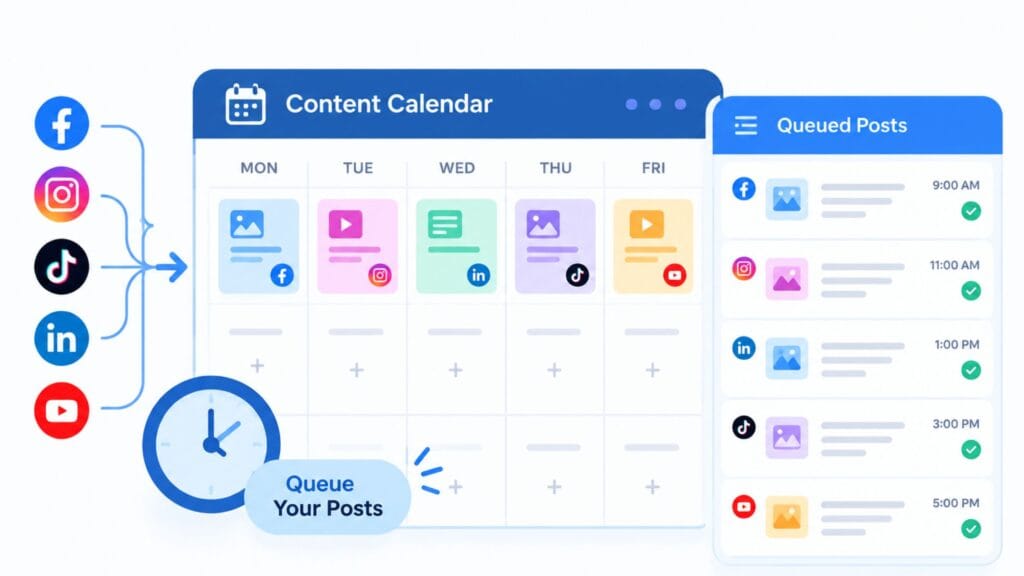
A scheduler and a full social media management suite overlap but are not the same category. A scheduler’s core job is queuing posts and publishing them at set times across connected accounts. A broader management platform, the kind covered in our social media management tools roundup, typically adds unified inbox messaging, engagement tracking, competitor analysis and cross-platform reporting on top of scheduling.
If posting on a schedule is the only real need, a dedicated scheduler like the ones in this comparison is usually cheaper and simpler than an all-in-one suite. If a business already needs to monitor comments, track engagement and report on performance across platforms, the broader management tools are worth comparing separately rather than assuming a scheduler alone will cover it.
Matching a Scheduler to Posting Frequency and Channel Count
Choosing the right social media scheduler mostly comes down to posting frequency and channel count rather than brand recognition. For a single creator posting a handful of times a week across 2 or 3 platforms, Buffer’s free plan covers that comfortably without ever needing to upgrade. For a visually driven Instagram or Pinterest-heavy account willing to pay from day one, Later’s grid-planning tools justify the subscription once the trial ends.
For an agency managing multiple client accounts with approval workflows, SocialPilot’s or RecurPost’s paid tiers are built for that structure in a way Buffer’s per-channel pricing is not designed around. For anyone comfortable running their own server and wanting to avoid a subscription entirely regardless of scale, Postiz is worth the setup time.
Post Planner and Hootsuite: Why They Were Left Out of the Main Comparison
Post Planner and Hootsuite both turn up in the same search results as the five tools compared here, so it is worth explaining why neither made the main table. Post Planner is less a social media scheduler in its own right and more a content-discovery add-on that plugs into an existing scheduling workflow, finding shareable articles and images to queue rather than replacing the queuing tool itself. Comparing it directly against Buffer or Postiz would be comparing two different kinds of software.
Hootsuite, meanwhile, was one of the earliest names in this category and still carries the brand recognition from that period but its current pricing has moved firmly into trial-only territory, with a free plan long discontinued in favor of a short trial similar to Later and SocialPilot. Since that structure is already well covered by the Later and SocialPilot entries above, adding Hootsuite as a sixth near-identical trial-only row would repeat a finding this comparison already makes rather than add a new one.
FAQs
What is the best free social media scheduler in 2026?
Buffer is the only mainstream tool in this comparison with a genuinely permanent free plan, covering 3 channels and a 10-post queue per channel. Postiz is also free but as open-source, self-hosted software rather than a capped SaaS account.
Does Later have a free plan?
No. Later currently offers only a 14-day trial, after which continued use requires a paid subscription starting around $18.75 a month on annual billing.
Is RecurPost still free?
No. RecurPost discontinued its free plan and now offers a 14-day trial instead, the same structure as Later and SocialPilot.
What does it mean that Postiz is open source?
Postiz’s code is publicly available and free to run on your own server, with no vendor subscription required. The tradeoff is that you are responsible for hosting, updates and uptime yourself instead of a company managing that for you.
Is a social media scheduler the same as a social media management tool?
Not quite. A scheduler focuses on queuing and publishing posts on a timeline. A broader management platform typically adds inbox messaging, engagement tracking and cross-platform reporting on top of scheduling.
How many social accounts can I connect on Buffer’s free plan?
Buffer’s free plan connects up to 3 channels at once, chosen from platforms including Instagram, TikTok, Facebook, LinkedIn and Google Business Profile.
Conclusion
The honest answer to “which social media scheduler is free” narrows down fast once trials get separated from real free plans. Buffer is the practical default for anyone who wants to start scheduling today without paying and Postiz is the option for anyone willing to trade setup time for zero ongoing cost. Later, SocialPilot and RecurPost are all solid tools but budgeting for a subscription from the start is the more accurate way to plan around them rather than expecting the trial period to stretch indefinitely.
Once your posting schedule is sorted, BratGen also has a few generators worth bookmarking for quick graphics to go along with whatever you queue up next.