
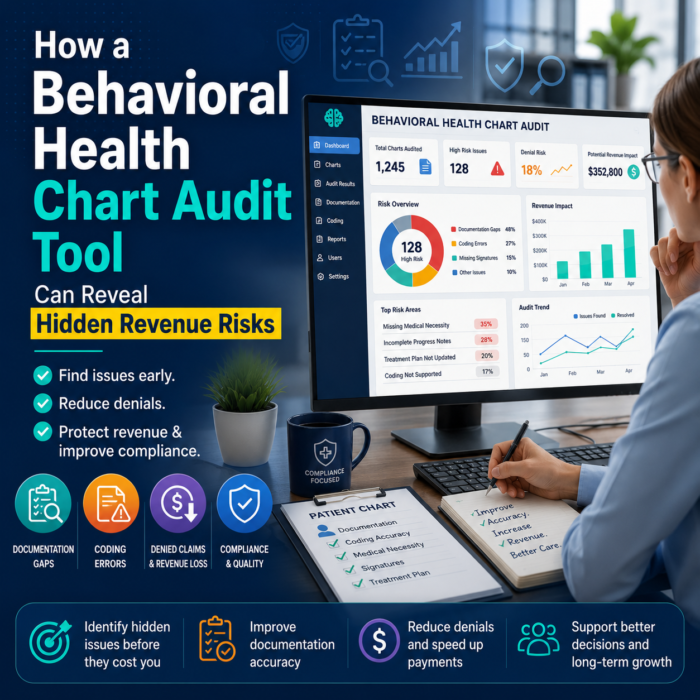
How a Behavioral Health Chart Audit Tool Can Reveal Hidden Revenue Risks
Money leaks do not always show up in obvious ways. A behavioral health practice may see steady patient flow and regular claims going out every week. On the surface everything can look fine. Still revenue can quietly slip away through small documentation mistakes, billing gaps or coding issues that no one notices right away.
That is where a Behavioral Health Chart Audit Tool becomes useful. It helps organizations catch the problems hiding inside everyday workflows before those issues turn into denied claims, lost payments or compliance trouble.
Many providers focus only on patient care during busy days. That makes sense. The workload already feels heavy. Staff members move from one task to another without much time to stop and review charts carefully. Small details get missed. One missing signature or incomplete note may not look serious at first. Over time though these little things start affecting the financial side of the practice.
A Behavioral Health Chart Audit Tool gives teams a better way to spot those hidden risks early.
Revenue Problems Often Start Small
Most financial problems in behavioral health do not begin with one huge mistake. They grow from repeated small errors.
A therapist forgets to update a treatment plan. A progress note lacks medical necessity language. A billing code does not match the service provided. Someone enters incomplete patient information into the system. These things happen more often than many people think.
At first the impact seems minor. One denied claim here, one delayed payment there. But when the same problems continue for months the revenue loss becomes serious.
According to CMS, the Medicare Fee-for-Service improper payment rate reached 7.38% in 2023, with insufficient documentation listed as one of the biggest causes.
Some treatment centers only realize the problem after cash flow starts slowing down. By then staff members must spend extra time fixing old claims and responding to payer requests. That process creates stress for everyone involved.
Regular audits help stop that cycle before it grows.
Hidden Revenue Risks Can Exist in Documentation
Documentation issues create some of the biggest financial risks in behavioral health settings. Insurance companies expect clear and complete records. If the notes do not support the billed service, the payer may deny reimbursement.
This happens even when the provider delivered proper care.
A Behavioral Health Chart Audit Tool helps review records for missing details, inconsistent information and weak documentation patterns. Instead of waiting for an external audit the organization can catch issues internally.
That matters because many staff members do not realize certain habits create risk. They may copy old wording into new notes or rush through documentation at the end of the day. Some notes become too vague. Others miss required updates.
Over time those patterns can hurt reimbursement rates.
The audit process gives leadership a clearer picture of what actually happens inside the organization. That visibility helps teams improve faster.
Coding Errors Quietly Drain Revenue
Coding mistakes can also create major financial damage.
Sometimes providers use outdated codes. In other situations the documentation may support one service level while billing submits another. Even small coding inconsistencies can trigger denials or payment delays.
These issues often stay hidden because billing teams stay busy handling large claim volumes every day. They may not have enough time to review trends deeply.
A Behavioral Health Chart Audit Tool helps identify repeated coding problems across charts. Instead of fixing claims one by one, staff can recognize larger patterns and solve the root issue.
That saves time. It also protects long term revenue.
Accurate coding does more than improve reimbursement. It also lowers compliance risk. Insurance companies pay close attention to behavioral health claims especially when billing patterns start looking unusual. Organizations need to feel confident that their records fully support the services they bill for.
Strong auditing supports that goal.
Staff Training Gaps Affect Financial Performance
Revenue risks do not always come from technology or billing systems. Sometimes the real problem comes from inconsistent staff training.
New employees may not fully understand documentation standards. Different providers may follow different habits. One person writes detailed notes while another keeps everything short and incomplete.
That inconsistency creates problems during payer reviews.
A Behavioral Health Chart Audit Tool can reveal where staff members need more guidance. Leaders can use audit findings to improve training sessions and create clearer expectations.
This approach works better than blaming employees after mistakes happen.
When staff understand why documentation matters they usually become more careful with their work. Small improvements across the team can make a huge difference financially.
Denied Claims Cost More Than People Think
Many organizations focus only on the value of denied claims themselves. The real cost usually goes beyond that.
Every denied claim creates extra work. Someone must review the issue, gather documents, correct errors and resubmit the claim. Staff members spend hours dealing with problems that could have been prevented earlier.
That lost time affects productivity across the entire practice.
Repeated denials can also slow down payments which hurts cash flow. Smaller behavioral health centers may feel that pressure quickly. Delayed revenue makes daily operations harder especially when payroll and operational expenses continue growing.
Using a Behavioral Health Chart Audit Tool helps reduce preventable denials before they reach that stage.
Instead of reacting to financial problems later organizations can take a more proactive approach.
Audits Help Leadership Make Better Decisions
Good financial decisions depend on accurate information.
Without proper audits leadership teams may assume everything works fine because claims continue moving through the system. Meanwhile hidden issues continue building in the background.
Auditing creates a clearer picture of operational health.
An organization may discover that one department experiences far more documentation issues than another. Or maybe certain service types trigger more denials. These insights help leaders decide where to focus training resources and workflow improvements.
A Behavioral Health Chart Audit Tool turns scattered information into something useful and actionable.
That matters in a field where margins already feel tight.
Strong Auditing Supports Long Term Growth
Growth brings new challenges. As behavioral health organizations expand the risk of inconsistent documentation and billing problems also increases.
More providers mean more charts to review. More claims go out each week. More systems and workflows become involved.
Without strong auditing processes small revenue leaks can spread across the organization very fast.
That is why many growing practices invest in better audit systems early. They want to build stable operations before problems become harder to control.
A Behavioral Health Chart Audit Tool supports that growth by creating more consistency across teams. It helps organizations maintain quality while handling larger patient volumes.
That stability matters for long term success.
Final Thoughts
Revenue problems rarely appear overnight. Most of them build slowly through missed details, weak documentation, coding mistakes and inconsistent workflows. Many organizations do not notice the damage until financial pressure starts affecting daily operations.
A Behavioral Health Chart Audit Tool helps bring those hidden risks into the open. It gives behavioral health providers a chance to fix problems early, improve documentation quality and protect reimbursement.
More importantly it helps teams feel more confident about the work they do every day.
In behavioral health even small improvements can create a big financial impact over time.