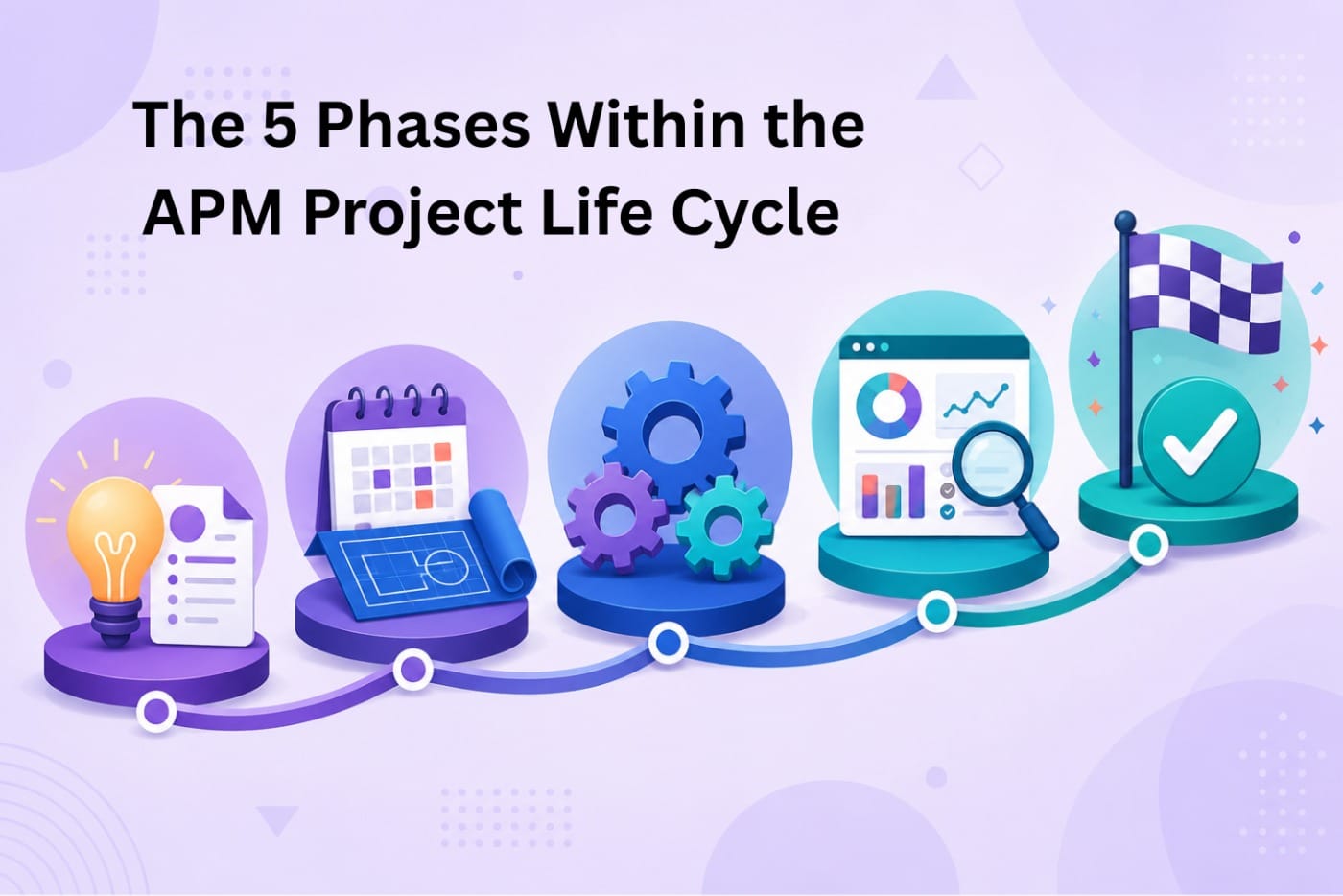
The 5 Phases Within the APM Project Life Cycle
Have you ever seen a promising project lose direction because the team rushed into delivery without a clear process? APM Training helps professionals understand how structured project practices can guide work from an initial idea to a completed outcome.
The APM project life cycle provides a clear route for organising tasks and decisions. It supports careful planning while allowing teams to respond when circumstances change. In this blog, we will explore five key phases and see how each one contributes to successful project delivery.
Table of Contents
- Initiation
- Planning
- Execution
- Monitoring and Controlling
- Closure
- Conclusion
1. Initiation
The initiation phase turns an early idea into a clear project proposal. It helps leaders decide whether the project is valuable and worth supporting.
The main question
Should the organisation begin this project?
Key activities
- Defining the project purpose
- Identifying expected benefits
- Setting the initial scope
- Recognising important stakeholders
- Estimating costs and resource needs
- Reviewing early risks
During initiation, a business case is frequently developed. The problem, suggested remedy, anticipated value, and necessary investment are all explained. This information is used by leaders to approve or reevaluate the project.
Simple example
A business wishes to implement a new customer support system. It looks at existing issues, anticipated enhancements, and potential expenses before purchasing any programme. This evaluation aids the business in determining whether the project provides sufficient value.
Expected result
The phase should end with a clear decision, an agreed purpose and suitable authority to continue.
2. Planning
Approval gives the project permission to move forward. It does not explain how the team will complete the work. That detail is developed during the planning phase.
The main question
How will the team deliver the required outcome?
Key activities
- Dividing the work into tasks
- Setting milestones and deadlines
- Assigning responsibilities
- Estimating the project budget
- Planning resources and communication
- Identifying risks and responses
- Agreeing on quality standards
Strong project planning connects these activities in one practical approach. It shows when tasks should begin, how they depend on one another and who will complete them.
The plan should provide direction without becoming too rigid. New risks, stakeholder needs or business priorities may require changes later.
Useful outputs
Common outputs include a project schedule, resource plan, risk register, communication plan and agreed budget.
Expected result
Everyone should understand the work, their responsibilities and the standards used to measure success.
3. Execution
The execution phase is where plans become action. Team members complete assigned tasks and produce the agreed project deliverables.
The main question
Are we creating the intended result effectively?
Key activities
- Coordinating people and resources
- Completing planned tasks
- Sharing progress information
- Managing team communication
- Reviewing early outputs
- Addressing delivery problems
- Maintaining quality
Effective project execution depends on more than following a schedule. People need clear instructions, suitable resources and quick support when difficulties appear.
Simple example
During a website project, designers create page layouts while developers build the required functions. Content teams prepare written material. The project manager coordinates these activities so that each group receives the information it needs.
Signs of effective execution
Tasks are completed to the agreed standard. Team members understand their priorities. Stakeholders receive useful updates, and problems are raised early.
Expected result
The team should produce usable deliverables that meet the agreed project requirements.
4. Monitoring and Controlling
Monitoring and Controlling happen alongside execution. They help the project manager compare actual performance with the approved plan and respond when results begin to move off course.
The main question
Is the project still progressing as expected?
Areas to monitor
- Schedule progress
- Project spending
- Quality of deliverables
- Resource availability
- Current risks and issues
- Changes to project scope
- Stakeholder expectations
Teams can see delays or quality issues early on with accurate project monitoring. Then, remedial action can be implemented before a minor problem escalates into a major one.
Quick control check
The management should consider how a change would impact time, money, quality, resources, and anticipated benefits before authorising it. A new budget or delivery date might still be necessary for a beneficial improvement.
Expected result
Even when changes are needed, the project stays clear, under control, and linked to its initial goals.
5. Closure
The project is not necessarily finished just because the final deadline was met. The closure phase verifies that the work has been approved and that any outstanding issues have been resolved.
The main question
Has the project delivered everything it promised?
Key activities
- Checking completed deliverables
- Gaining formal stakeholder acceptance
- Resolving remaining actions
- Closing contracts and records
- Releasing project resources
- Handing over the final output
- Recording lessons learned
A final project review looks at what went well and what needs improvement. These insights can help future projects make better choices.
Simple example
After introducing a new customer service system, the project team checks that employees can use it, confirms that required functions work and transfers responsibility to the support team.
Expected result
The project ends formally, knowledge is preserved and the completed output moves into normal business use.
Conclusion
Clear phases prevent projects from becoming a collection of disconnected tasks. Initiation confirms value, planning creates direction and execution produces results. Monitoring and controlling protect progress, while closure secures acceptance and learning.
Together, these phases strengthen project performance at every stage. Professionals can explore APM Training from The Knowledge Academy, a global training provider, to develop practical skills for planning, managing and completing projects with greater clarity and confidence.