
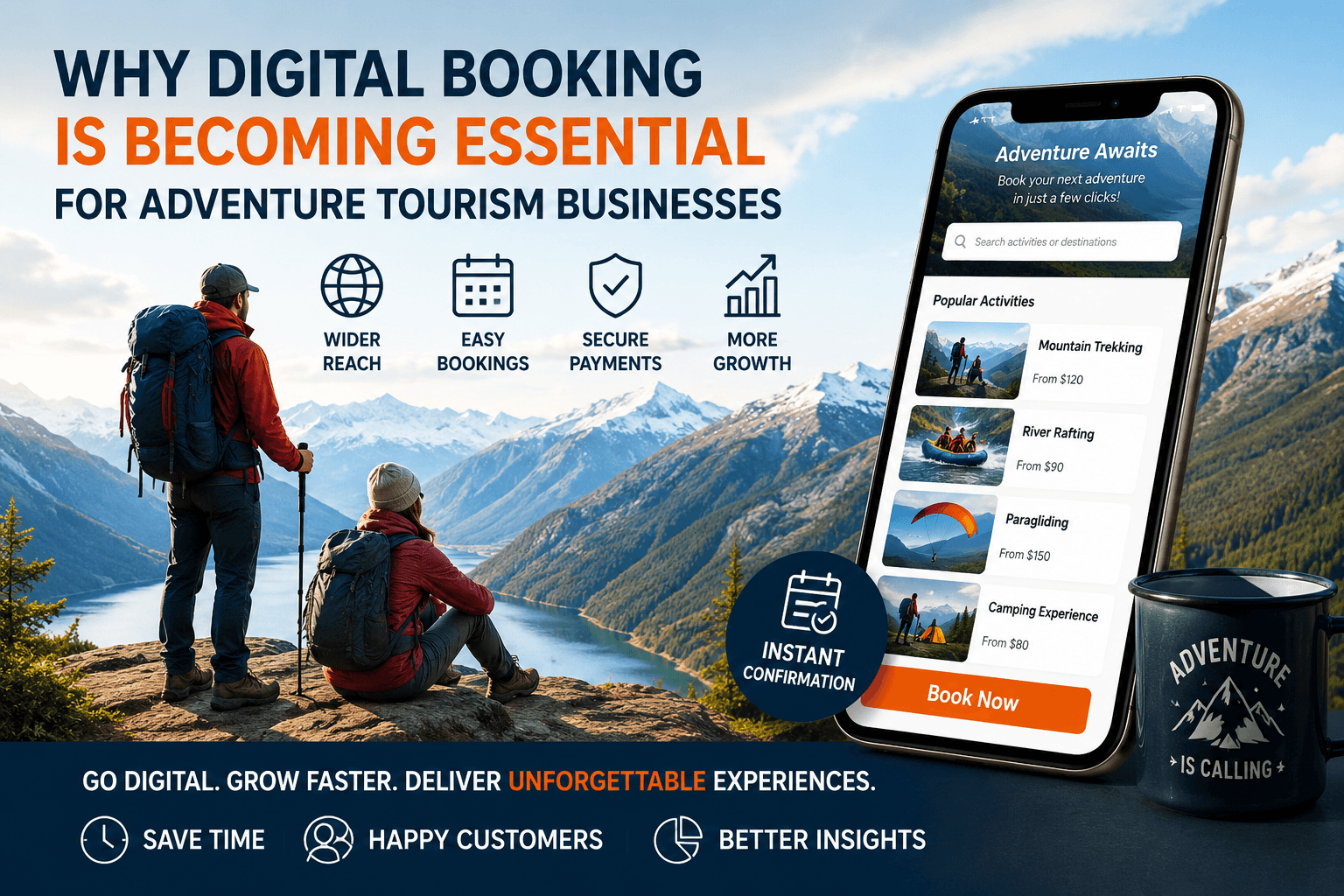
Why Digital Booking Is Becoming Essential for Adventure Tourism Businesses
Adventure tourism has changed significantly as travelers increasingly use digital platforms to discover, compare, and reserve experiences. Whether they are interested in hiking excursions, kayaking, ziplining, rafting, wildlife tours, or other outdoor activities, customers often expect to find availability and complete a reservation online.
For adventure tourism businesses, this shift creates both an opportunity and a challenge. Operators need to provide convenient booking experiences while also managing limited capacity, equipment, guides, schedules, payments, and customer communication. Digital booking technology can help bring these responsibilities together and make daily operations more efficient.
Changing Expectations of Modern Travelers
Travelers have become accustomed to booking flights, hotels, restaurants, and activities online. They expect tourism businesses to provide similar convenience.
A potential customer may discover an adventure activity through a search engine or social media and want to reserve it immediately. If the business does not provide an easy digital booking option, the customer may choose another provider.
An online reservation process allows businesses to capture demand when customer interest is highest.
Making Reservations Available Around the Clock
Traditional booking methods often depend on business hours.
Phone calls and manual email reservations require staff to be available to respond. Digital booking systems can operate continuously, allowing customers to check availability and reserve activities at any time.
This is particularly valuable for international travelers who may be researching activities outside the operator’s normal working hours.
Managing Limited Capacity
Adventure activities often have strict capacity limits.
A rafting trip may have a maximum number of participants. A guided climbing excursion may require a specific guide-to-customer ratio. Equipment such as kayaks, bicycles, or safety gear may also be limited.
Digital booking systems can automatically update availability as reservations are made, helping businesses maintain accurate capacity information.
Reducing Double Bookings
Manual reservation systems can create scheduling problems when multiple employees manage bookings through different channels.
A centralized digital system can help keep reservations synchronized.
When a customer books a particular time slot, the available capacity can be updated across supported channels. This reduces the risk of selling more spaces than are actually available.
Simplifying Customer Payments
Customers generally expect a straightforward way to pay for activities online.
Digital booking systems can integrate payment processing into the reservation workflow, allowing customers to complete purchases without lengthy back-and-forth communication.
Automated payment confirmations and receipts can also reduce administrative work for staff.
Businesses should ensure that payment processing follows appropriate security requirements and protects customer information.
Improving Customer Communication
Adventure activities often require customers to prepare before arrival.
Participants may need information about:
- Meeting points
- Required clothing
- Equipment
- Physical requirements
- Safety instructions
- Weather policies
- Activity duration
- Arrival times
Digital booking systems can automate messages containing these details.
Customers can receive important information immediately after booking and additional reminders before their scheduled activity.
Managing Weather and Schedule Changes
Outdoor activities are often influenced by weather and environmental conditions.
An operator may need to modify or cancel an activity when conditions are unsuitable. Digital booking systems can help organize the administrative side of these changes.
Once a qualified operator makes a decision, customers can be notified through automated email or messaging workflows where supported.
This allows staff to communicate changes more efficiently while keeping safety decisions under appropriate human control.
Using Adventure Tour Booking Software
As adventure tourism businesses grow, spreadsheets and basic calendars may no longer provide enough functionality. Adventure tour booking software can help operators manage reservations, customer information, availability, payments, schedules, and communications through a centralized system.
A specialized solution can be particularly useful for businesses managing multiple activities, guides, equipment types, or departure times.
Supporting Guide and Staff Scheduling
Adventure tourism depends heavily on trained guides and instructors.
A business may need to coordinate guide availability with customer bookings and activity requirements.
Digital scheduling tools can help managers assign employees to specific tours and identify potential scheduling conflicts.
This can make workforce planning more efficient, especially during busy seasons.
Managing Equipment
Equipment availability can directly affect whether an activity can operate.
Operators may need to track helmets, life jackets, bicycles, kayaks, climbing equipment, or other specialized gear.
A connected booking system can help businesses understand how reservations affect equipment requirements.
This makes it easier to plan maintenance, replacements, and equipment allocation.
Improving Customer Data Management
Digital bookings create organized records of customer information and reservations.
Staff can use these records to answer questions, confirm bookings, and manage changes more efficiently.
Businesses can also use aggregated booking information to identify trends without relying entirely on manual records.
Because customer data can be sensitive, appropriate privacy and access controls should always be maintained.
Supporting Multiple Booking Channels
Adventure tourism businesses may sell activities through their own websites, social media, travel marketplaces, and other distribution channels.
Managing each channel independently can increase administrative work and create availability problems.
A digital booking system with suitable integrations can help centralize reservations from supported channels.
This allows businesses to expand their online reach without necessarily creating a separate manual process for every booking source.
Increasing Direct Bookings
Third-party travel platforms can help adventure operators reach new customers, but direct bookings can also be valuable.
A professional website with an easy booking process allows customers to reserve activities without relying entirely on external marketplaces.
Businesses can use digital marketing, search visibility, social media, and email communication to direct interested travelers toward their own booking channels.
Using Booking Data for Better Decisions
Digital systems can provide useful information about customer behavior and business performance.
Operators may analyze:
- Most popular activities
- Peak booking periods
- Average group sizes
- Cancellation rates
- Revenue by activity
- Most popular time slots
- Booking sources
This information can help businesses make more informed decisions about staffing, scheduling, marketing, and pricing.
Improving the Customer Experience
A smooth booking process creates a positive first impression.
Customers can view available activities, select a convenient time, receive immediate confirmation, and access important information without waiting for staff to respond.
The experience can continue after the reservation through reminders and follow-up communication.
This level of convenience can make a business appear more organized and professional.
Supporting Business Growth
Digital booking becomes particularly valuable when an adventure tourism company begins to grow.
More customers usually mean more reservations, questions, payments, schedule changes, and administrative work.
Automation can help absorb some of this increased workload. Staff can then focus more attention on delivering safe and memorable experiences rather than processing routine bookings.
Keeping Human Expertise at the Center
Although digital booking can automate many processes, adventure tourism remains a people-focused industry.
Experienced guides are responsible for managing participants, explaining safety procedures, assessing conditions, and creating engaging experiences.
Technology should support these responsibilities rather than replace professional judgment.
The strongest operations combine efficient digital systems with knowledgeable staff and well-established safety procedures.
Choosing the Right Digital Booking System
Before adopting booking technology, businesses should evaluate their specific requirements.
Important features may include:
- Online reservations
- Real-time availability
- Payment processing
- Automated notifications
- Staff scheduling
- Equipment management
- Customer records
- Reporting and analytics
- Mobile access
- Third-party integrations
The system should be easy for both customers and employees to use.
Conclusion
Digital booking is becoming essential for adventure tourism businesses because modern travelers increasingly expect convenient online access to activities and experiences. At the same time, operators need efficient ways to manage limited capacity, guides, equipment, payments, schedules, and customer communication.
A well-designed digital booking system can reduce repetitive administrative work, minimize booking conflicts, improve customer communication, and provide valuable operational data. When combined with experienced staff and strong safety procedures, technology can help adventure tourism businesses deliver smoother experiences while preparing for sustainable growth.
For operators looking to remain competitive in an increasingly digital travel market, investing in an efficient booking process is no longer simply a convenience. It can be an important part of building a modern and customer-focused adventure tourism business.