Designing for Human Interaction: Moving Past Templates to Secure Digital Authority
The fundamental concept of what a website needs to achieve has evolved. In the early days of corporate web development, simply having an online presence—a basic static home page detailing operational hours, a services list, and a contact phone number—was enough to outpace local competition. Later, generic theme builders and drag-and-drop templates leveled the playing field, making it cheap and easy for any business to establish a functional site in an afternoon.
But today, consumer behavior has grown sophisticated, and search engine algorithms are deeply localized. We live in an information-heavy digital space where generic web layouts no longer build real trust. Capturing market share now requires an intentional blend of aesthetic minimalism, micro-interactions, and high-performance frontend engineering.
1. Visual Structuralism and Cognitive Ease
When an online consumer lands on a website, their subconscious evaluates corporate credibility in less than a single second. Cluttered banners, complex navigation pathways, and dense blocks of promotional text frustrate modern visitors, increasing early bounce rates. The trending aesthetic standard focuses entirely on visual structuralism—leveraging precise grid hierarchies, clean typography, and generous whitespace.
By adopting structured geometric configurations, businesses can organize complex information into highly scannable, bite-sized modules, including downloadable resources like an equipment sign out template. This block-based framework translates seamlessly across varying desktop displays and mobile monitors.Rather than forcing a prospect to dig through traditional multi-tiered submenus, a clean layout allows users to scan the interface and understand your core brand offerings in a single glance.
2. Engineering for Velocity: Speed as a Primary UX Signal
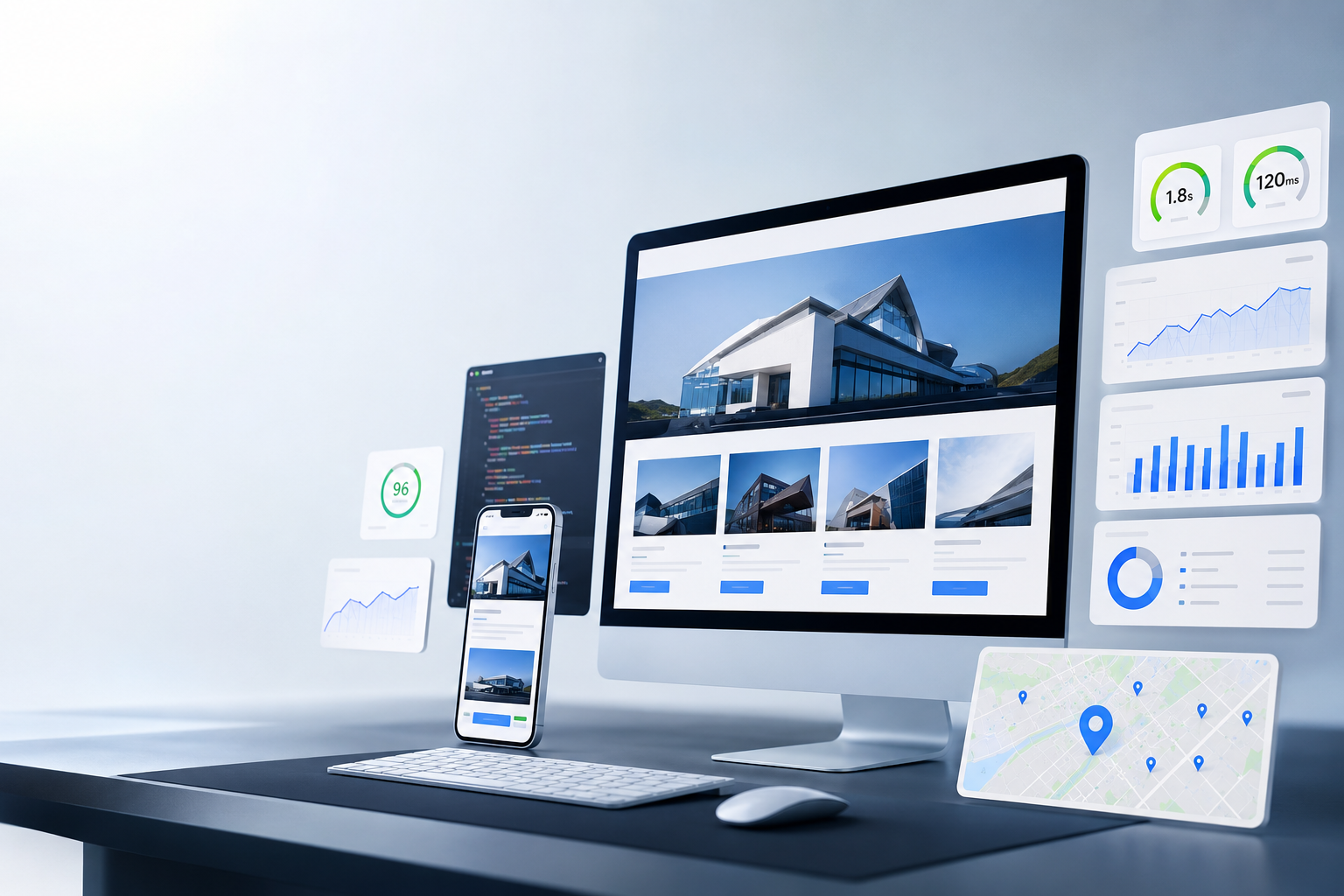
A stunning visual layout cannot rescue a website that runs slowly. Performance is a cornerstone of modern user experience, and search engines actively penalize domains that load sluggishly. Google’s Core Web Vitals measure real-world performance metrics to determine organic visibility rankings. If your system features heavy code bundles, uncompressed media assets, or bloated background scripts, it will be pushed down the results page.
[User Action] ──> [Server Response (TTFB)] ──> [Largest Contentful Paint] ──> [Interactive System Ready]
│ │
Target: < 200ms Target: < 2.5 Seconds
Achieving top-tier site speed requires deep optimization:
- Next-Gen Media Delivery: Encoding bulky imagery assets into advanced, lean image formats like WebP or AVIF to slash file size while preserving pixel-perfect quality.
- Dynamic Lazy Loading: Scripting page assets to compile and download only as a visitor scrolls them into physical view, saving initial processing bandwidth.
- Code Modernization: Stripping away bloated code templates and unnecessary framework scripts that create browser-side execution bottlenecks.
3. Prioritizing True Mobile Fluidity Over Desktop Downscaling
Mobile usability is no longer just a separate consideration; it is the fundamental core of web infrastructure. Because smartphones drive more than half of global web interactions, an adaptive layout cannot feel like a secondary, stripped-down version of a desktop screen.
Every button, form, and text link must be built with mobile ergonomics in mind. This means designing touch targets with enough hit padding to avoid accidental clicks, choosing fluid grid breaks so columns restack logically on any screen size, and selecting responsive typography that maintains comfortable readability without manual zooming. When an interface delivers a flawless mobile experience, user satisfaction increases and search visibility scales naturally.
4. Hyper-Local SEO Integration as a Brand Strategy
While large-scale marketing campaigns focus on broad, national audiences, regional companies scale by dominating localized search intent. When a prospective customer searches for an immediate, nearby solution, search engines prioritize highly optimized local businesses.
Securing these high-intent local opportunities requires deep, technical local SEO integration.This means implementing structured local schema data, optimizing core web performance for mobile connections, using a bulk DR checker, and designing custom regional landing hubs.. When a brand combines top-tier visual aesthetics with high local search visibility, it captures valuable traffic exactly when consumers are ready to convert.
5. Integrating Advanced Coding with Focused Regional Strategy
Building a high-performance web asset requires a rare combination of custom frontend programming, advanced conversion design, and localized search engine strategy. For businesses trying to stand out in growing regional economies, template-based site builders simply cannot provide the speed, custom functionality, or tailored UX pipelines required to scale.
If your strategic goal is to establish an authoritative online presence within competitive regional corridors, partnering with an elite agency like Ankit Designs ensures your platform is engineered for long-term growth. Collaborating with a dedicated local expert ensures your site features clean code, responsive frameworks, and powerful conversion architectures built for your specific target audience. Professional development handles the complex engineering, turning your website into an automated lead generator.
Technical Audit Metrics for Enterprise Growth
To determine whether your current website infrastructure is helping or hurting your corporate expansion goals, evaluate your platform against these vital technical metrics:
| Performance Indicator | Targeted Level | Strategic Growth Value |
| Largest Contentful Paint (LCP) | Under 2.5 Seconds | Minimizes early bounce rates by rendering core structural layout items almost instantly. |
| Interaction to Next Paint (INP) | Under 200 Milliseconds | Provides a snappy, highly responsive feel when users interact with mobile navigation bars or forms. |
| Mobile Speed Score | 90+ on PageSpeed Insights | Directly impacts your visibility, credibility, and organic keyword rankings in search results. |
| Accessibility Grade | WCAG 2.2 AA Standard | Guarantees a fully inclusive interface for all individuals, including those utilizing screen readers. |
The Conversion Bottleneck: Your website is your most active brand representative, interacting with prospects 24 hours a day, 7 days a week. If it loads slowly, feels outdated, or behaves poorly on mobile devices, it is actively driving qualified business directly to your competitors.
The future of business growth belongs to organizations that treat their digital platforms as critical capital assets. By stepping away from rigid templates and investing in fast, accessible, and hyper-localized custom design, you unlock maximum search authority and build a powerful foundation for scalable long-term growth.