
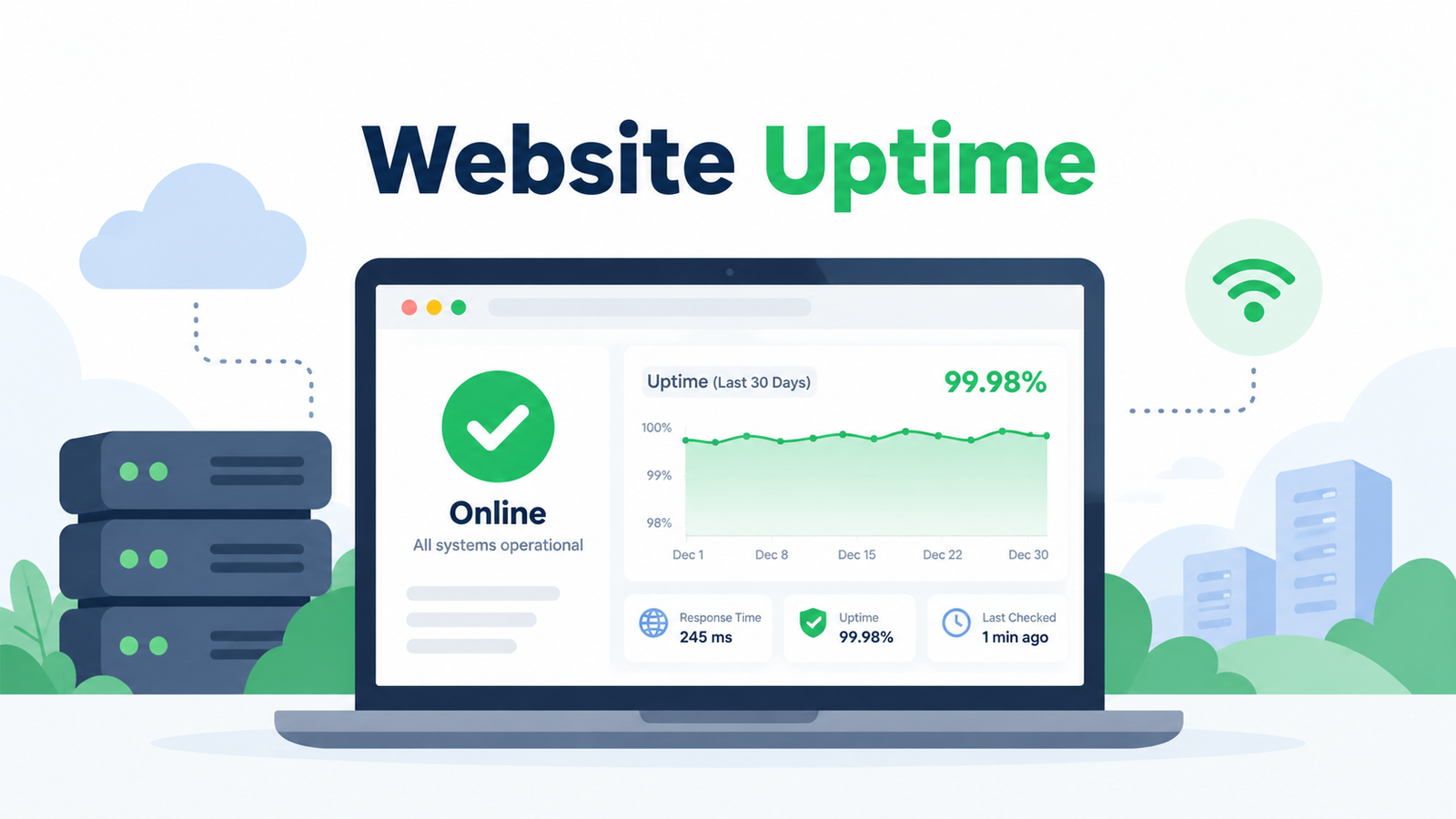
Website Uptime Basics: Why Regular Status Checks Matter for Site Owners
A website is often the first point of contact between a business and its customers. Whether someone wants to read an article, purchase a product, or contact a service provider, they expect the website to be available whenever they visit.
However, websites can experience unexpected downtime due to server errors, hosting problems, DNS issues, or technical failures. Even temporary interruptions can frustrate visitors, disrupt business operations, and create accessibility problems for search engines.
This is why website uptime monitoring and regular website status checks are important for every website owner.
Understanding website availability, identifying downtime early, and maintaining a reliable online presence can help protect user experience and support long-term website performance.
What Is Website Uptime?
Website uptime refers to the amount of time a website remains accessible and operational during a specific period. It is commonly expressed as a percentage. For example, 99.9% uptime means a website was available for 99.9% of the measured period.
Website downtime is the opposite. It occurs when visitors cannot access a website or when essential website services become unavailable.
A website might experience downtime because of:
- Server or hosting failures
- Incorrect DNS configurations
- Software or plugin conflicts
- Network connectivity problems
- Server resource limitations
- Scheduled maintenance
- Unexpected traffic spikes
Although achieving 100% uptime is an ideal goal, occasional interruptions can happen even with reliable hosting infrastructure. The important objective is to detect problems quickly and reduce their frequency and duration.
Why Website Uptime Matters for Site Owners
Website availability affects several aspects of online operations.
1. Better User Experience
Visitors expect websites to work whenever they need information. If a page repeatedly fails to load, users may leave and look for alternatives.
Maintaining reliable website availability helps visitors navigate content, access services, and complete important actions without unnecessary interruptions.
2. Business Reliability and Customer Trust
A website that frequently becomes unavailable can create a negative impression. For e-commerce businesses, downtime may interrupt orders or payments. For service providers, it can prevent potential customers from submitting inquiries.
Regular checks help identify availability issues before they cause prolonged disruption.
3. Technical SEO and Search Visibility
Search engines need access to webpages to crawl and process their content. If Google repeatedly encounters server errors, it may temporarily reduce crawling activity. Prolonged availability problems can eventually affect the indexing of important pages.
However, brief downtime does not automatically cause immediate ranking losses. A stable website supports technical SEO by keeping valuable content accessible to search engines and visitors.
How to Check Website Status Online
One of the easiest ways to investigate website availability is to perform an online status check.
For example, Smooli’s Website Status Checker provides a convenient starting point for checking whether a website is accessible.
Website owners can use this type of utility when investigating loading failures or suspected downtime.
A basic website status checking process involves:
- Enter the website URL: Provide the complete address of the page you want to examine.
- Run the status check: Submit the URL for an accessibility test.
- Review the result: Determine whether the website responds successfully or indicates a potential problem.
- Investigate errors: If the website appears unavailable, examine possible hosting, DNS, or connection issues.
- Test other pages: Check essential URLs individually rather than relying entirely on the homepage.
A manual status check provides information about the website at a particular moment. For continuous coverage, website owners should also consider an automated uptime monitoring service that performs recurring checks and provides downtime notifications.
Understanding Website Status Codes
HTTP status codes explain how a server responds when someone requests a webpage. Recognizing common codes helps website owners identify technical problems more efficiently.
| Status code | Meaning |
| 200 | The request was successful |
| 301 | The resource has permanently moved |
| 403 | Access to the resource is forbidden |
| 404 | The requested page was not found |
| 500 | An internal server error occurred |
| 502 | A gateway received an invalid response |
| 503 | The service is temporarily unavailable |
| 504 | A gateway request timed out |
A successful HTTP 200 response generally indicates that the server processed the request. However, it does not guarantee that every element of the webpage functions correctly.
Repeated 5xx errors deserve attention because they usually indicate server-side problems. Understanding these responses makes troubleshooting more effective.
How Regular Website Checks Support SEO
Technical accessibility is an important part of search engine optimization. Search engines need to retrieve webpage content before evaluating it for indexing. According to Google’s crawling documentation, repeated server availability problems can limit crawling activity.
Website owners should therefore monitor important pages and investigate persistent errors. Platforms such as Smooli AI bring together DNS, domain, SEO, and website-related utilities that can support routine technical checks.
These resources can help site owners investigate different website characteristics without relying on a separate platform for every task.
Frequently Asked Questions
What is website uptime?
Website uptime measures the percentage of time a website remains accessible during a particular period.
How can I check if my website is down?
Use an online website status checker, test the website in another browser, or try a different network. Investigate server or DNS problems if the issue persists.
Does website downtime affect SEO?
Prolonged or repeated downtime can interfere with Google crawling and indexing. Short interruptions do not necessarily cause immediate ranking changes.
How often should website status be checked?
Important business websites benefit from automated monitoring throughout the day. Manual checks are useful after major updates or technical changes.
Is 99.9% website uptime good?
99.9% uptime is a commonly used reliability target. It allows approximately 43 minutes of downtime over a 30-day period, so suitability depends on the website’s requirements.
Final Thoughts
Website uptime is an essential part of maintaining a reliable online presence. Unexpected downtime can affect visitors, disrupt business activities, and create technical SEO challenges when problems continue for extended periods.
Regular website status checks help identify accessibility issues, while automated monitoring provides ongoing visibility into website availability.
By combining reliable hosting, preventive maintenance, technical checks, and performance optimization, website owners can reduce disruptions and create a more dependable browsing experience.