How IT Asset Management Helps Businesses Track and Manage Their Technology Assets
Modern businesses depend on technology for almost every aspect of their daily operations. From laptops and smartphones to monitors, servers, and software applications, companies may manage hundreds or even thousands of technology assets. As an organization grows, keeping track of these assets manually becomes increasingly difficult.
This is where IT asset management (ITAM) becomes important. A structured IT asset management strategy allows businesses to maintain an accurate inventory, monitor asset ownership, manage equipment throughout its lifecycle, and reduce unnecessary technology expenses.
What Is IT Asset Management?
IT asset management is the process of tracking and managing an organization’s technology assets throughout their entire lifecycle. This can include hardware, software, accessories, and other IT resources.
An effective ITAM system helps organizations answer important questions such as:
- Which devices does the company currently own?
- Who is using each device?
- Where is a particular asset located?
- When was the equipment purchased?
- Is the device still under warranty?
- When should an asset be replaced?
- Which assets are no longer being used?
Having this information readily available gives IT teams better visibility and helps them make more informed decisions.
Why Businesses Need Better IT Asset Tracking
Many organizations start by tracking equipment with spreadsheets or basic databases. While this may work for a small number of devices, it can quickly become difficult to maintain as the company expands.
Employees may change departments, work remotely, receive replacement equipment, or leave the organization. Without a centralized system, asset records can become outdated, making it difficult to determine where company-owned equipment is located.
A dedicated IT asset management platform can centralize this information and make it easier for IT teams to maintain accurate records.
Managing the Complete Asset Lifecycle
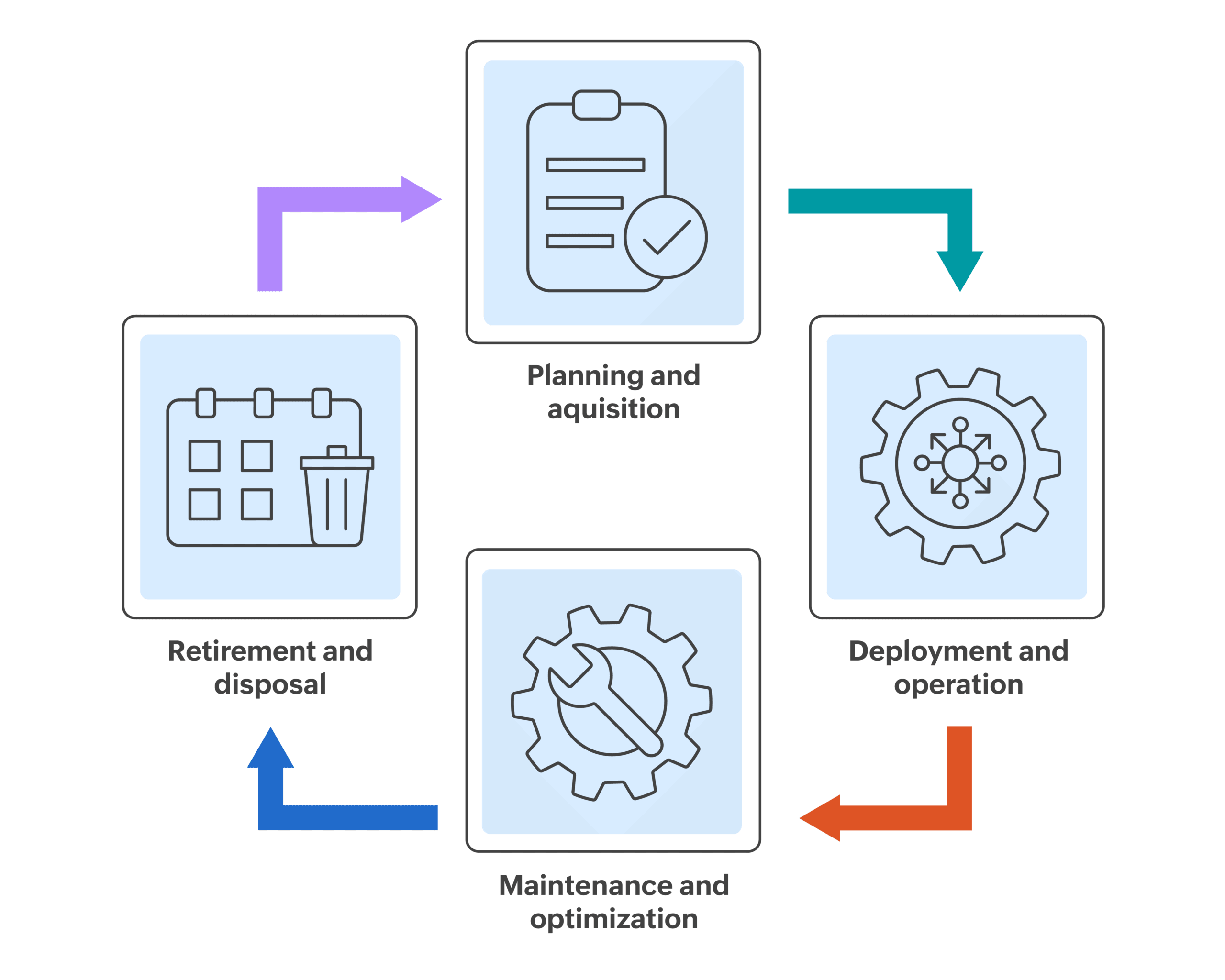
One of the most important benefits of IT asset management is lifecycle tracking.
An asset typically moves through several stages:
Procurement → Deployment → Assignment → Maintenance → Return → Retirement
Tracking each stage allows businesses to understand how their technology resources are being used. For example, when an employee receives a laptop, the IT department can record the device, assign it to that employee, monitor its status, and update the record when the laptop is eventually returned.
This creates a complete history for each asset instead of treating inventory as a simple list of devices.
Improving Accountability
Asset management also improves accountability within an organization.
When every laptop, monitor, smartphone, or other device is associated with a specific employee or location, it becomes easier to determine who is responsible for company equipment.
This can be particularly useful for organizations with remote or hybrid employees. IT teams can maintain accurate records even when employees are working from different offices or locations.
For businesses looking for a centralized way to organize and monitor their technology inventory, solutions such as bluetally.com can help simplify IT asset management and provide greater visibility into company assets.
Reducing Unnecessary IT Expenses
Poor asset visibility can lead to unnecessary spending. A company might purchase additional equipment because it does not realize that suitable devices are already available elsewhere in the organization.
Accurate inventory records can help IT departments identify unused or underutilized equipment before making new purchases.
Asset lifecycle data can also help organizations plan replacement cycles more effectively. Instead of replacing equipment based purely on assumptions, businesses can make decisions based on factors such as age, condition, usage, warranty status, and maintenance history.
Supporting Security and Compliance
IT asset management can also contribute to an organization’s security strategy.
Knowing which devices belong to the company and who is using them provides greater visibility into the technology environment. When an employee leaves, IT teams can identify assigned equipment and ensure that company assets are returned.
Maintaining detailed asset records can also make internal audits easier. Organizations can demonstrate where equipment is located, who is responsible for it, and how assets are managed throughout their lifecycle.
Integrating Asset Management With Other IT Tools
Modern IT environments often involve multiple systems. Companies may use identity management platforms, endpoint management solutions, help desk software, collaboration tools, and security systems simultaneously.
Integrating these systems with an asset management platform can reduce repetitive administrative work and help keep information synchronized.
For example, employee information from an identity platform can be connected with device records, while endpoint management data can provide additional information about company-owned computers.
Automation becomes especially valuable as the number of employees and devices increases.
Choosing the Right IT Asset Management Solution
When evaluating an IT asset management platform, businesses should consider several factors.
First, the platform should make it easy to maintain an accurate inventory. It should also provide useful asset history and allow organizations to associate equipment with employees, locations, and departments.
Integration capabilities are another important consideration. A solution that can connect with existing IT tools can reduce manual data entry and improve operational efficiency.
Organizations should also evaluate security controls, reporting capabilities, automation features, scalability, and ease of use.
Conclusion
Effective IT asset management gives businesses a clearer picture of their technology environment. Instead of relying on disconnected spreadsheets and manual records, organizations can maintain centralized information about their hardware and software assets.
Better visibility can improve accountability, reduce unnecessary purchases, simplify audits, support security processes, and make technology lifecycle planning more efficient.
As companies continue to rely on increasingly complex IT environments, having a reliable system for tracking and managing technology assets is becoming an essential part of modern IT operations.